Anxiety is something most people deal with at some point — a racing mind before a big meeting, tension that won’t let go at the end of the day, or that low hum of worry that follows you around. Music has long been one of the most accessible tools for easing that tension. And today, tools like Musick AI make it possible for anyone to create personalized, calming soundscapes without any musical training. With an AI Music Generator, the power to shape your own emotional soundtrack is genuinely within reach.
Why Anxiety Responds to Music
- The Science Behind the Calm
When a person listens to music, the brain releases dopamine and serotonin — chemicals linked to relaxation and pleasure. Calming music can lower heart rate, reduce blood pressure, and decrease cortisol, the hormone the body produces under stress.
Slower-tempo music in particular quiets the nervous system. It signals to the body that there is no immediate threat, which helps break the physical cycle of anxiety.
- Music Engages the Whole Brain
Music activates multiple brain regions at once, including those tied to emotion, memory, and sensory processing. That widespread engagement helps pull attention away from anxious thought loops and anchor it in the present moment.
This is also why music is often used alongside breathing exercises or meditation — it gives the mind something constructive to focus on rather than letting it spiral.
- The Effect Is Quick
Research suggests that listening to calming music for as little as 15 minutes can produce measurable reductions in anxiety. That makes music one of the fastest and most low-effort tools available for stress relief — no prescription, no complicated routine required, just sound.
Why Personalized Music Works Better
- Generic Playlists Have Limits
A pre-made playlist on a streaming app will work for some people and not others. Musical taste is deeply personal — a track that soothes one person might be irritating or overstimulating to someone else.
Personalized music, matched to a person’s preferred genre, mood, or tempo, tends to be far more effective at triggering relaxation. The emotional resonance of music that feels right for you matters more than whether it’s technically “calm.”
- Mood-Matched Music Changes the Experience
When music reflects your current emotional state before gradually shifting to something more settled, it can help guide you through anxiety rather than jarring you out of it. This technique — sometimes called the “iso principle” in music therapy — works because the brain responds better to gradual emotional transitions.
- Creating Your Own Track Adds an Extra Layer
There’s something uniquely grounding about music you made yourself, even if an AI helped you make it. The act of choosing a mood, describing a vibe, and generating something new brings a sense of agency — which is itself the opposite of how anxiety makes a person feel.
What Musick AI Offers
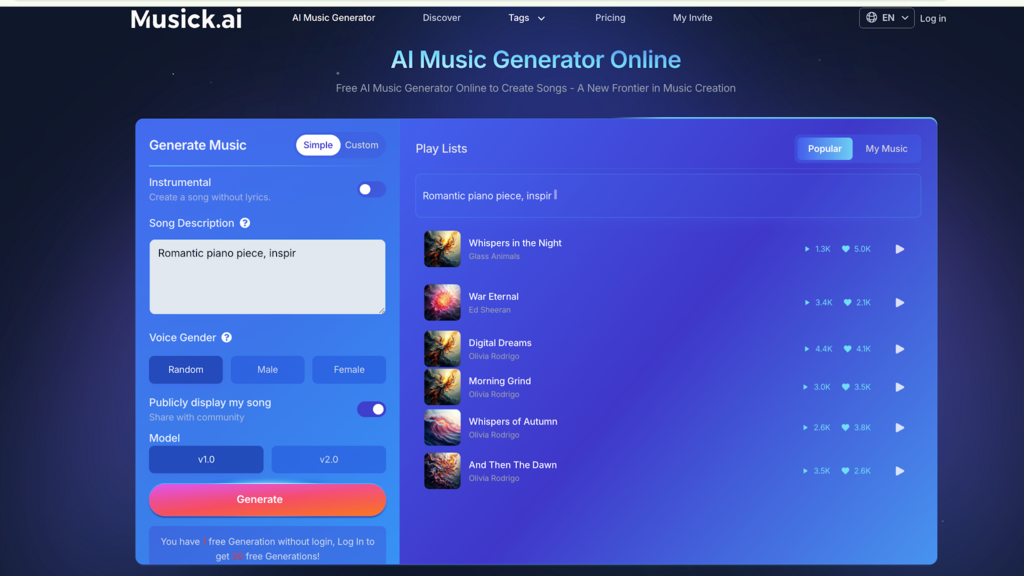
Musick AI is a free online AI Music Maker that lets users generate original songs and instrumentals from simple text prompts. No musical knowledge is needed.
- Instrumental and Vocal Modes
Users can choose between creating a full song with lyrics and vocals, or generating a purely instrumental track. For anxiety relief, instrumental mode is often ideal — no lyrics means fewer distractions for the mind.
- Genre Flexibility
Musick AI supports a wide range of genres — from classical and jazz to ambient, R&B, and beyond. When it comes to easing anxiety, genres like classical, jazz, blues, and ambient tend to work well. Being able to choose a genre rather than scroll through a pre-made library means the output actually fits what the user is looking for.
- Prompt-Based Generation
The generation process starts with a text description. A user might type something like: “a slow, peaceful acoustic piece with soft guitar and low tempo, calming mood, no drums.” Musick AI interprets that input and produces a matching track. The more specific the description, the better the result.
Additional Tools Inside Musick AI
Beyond basic song generation, Musick AI includes several tools that add creative depth to the experience.
- AI Song Lyrics Generator
This tool generates lyrics based on genre and mood input. For users who want a vocal track that matches a specific emotional theme — say, a song about letting go of worry — this is a useful starting point.
- AI Beat Producer
The beat producer allows users to write out melody notes and turn them into structured instrumental pieces. It’s a more hands-on option for those who want a little more control over the rhythm and tempo of what they create.
- AI Rap Generator
While rap isn’t the first genre that comes to mind for anxiety relief, rhythmic speech-based music has well-documented calming effects for certain people. Musick AI‘s rap generator lets users explore that approach too, with genre and style selection built in.
Practical Ways to Use AI Music for Anxiety Relief
Building a personal library of calming tracks takes very little time with the right tool. Here are some specific use cases:
- Before sleep: Generate a slow instrumental with soft strings or acoustic guitar and no percussion. Set the mood to “calm” or “peaceful.” Use it as background sound while winding down.
- During work or study: A mid-tempo jazz or ambient track with no lyrics keeps the brain engaged without overstimulating it. This helps reduce background anxiety while maintaining focus.
- During meditation or breathing exercises: Generate a long, slow track with minimal variation — something that feels almost like a drone or sustained tone. It supports sustained attention on the breath.
- After a stressful event: Try generating something that matches your current mood first — perhaps something with a slightly unsettled energy — then follow it with a second track that’s calmer. The shift can help the nervous system ease down more naturally.
Tips for Getting the Best Results
Getting useful AI Music out of any generator comes down to how clearly the prompt is written. A few things to keep in mind:

- Describe the Feel, Not Just the Genre
Instead of just writing “classical,” try: “slow classical piano, melancholic but gentle, minimal arrangement, low BPM.” More descriptive prompts produce more accurate results.
- Use Mood Words
Words like “calm,” “dreamy,” “soft,” “quiet,” or “peaceful” help the AI understand the emotional tone wanted. Avoid vague terms like “nice” — they don’t give the model enough to work with.
- Specify Instruments When Possible
If a certain sound — like acoustic guitar, piano, or strings — tends to be calming for someone, naming it in the prompt increases the chance that the generated track will include it. Musick AI responds to instrument references in the prompt.
Making Music Listening a Regular Habit
Anxiety doesn’t disappear from a single calming track. What actually helps is consistency — building music into daily routines in small, intentional ways.
- Set aside 10–15 minutes in the morning or evening specifically for calming music.
- Use music as a transition ritual between work and personal time, rather than just jumping between one and the other.
- Build a short personal playlist of AI-generated tracks that consistently help — and keep adding to it over time.
The goal isn’t to eliminate anxiety entirely with sound. It’s to give the nervous system regular moments of relief so it doesn’t stay stuck in a heightened state for too long.
Conclusion
Music is one of the oldest and most reliable tools for managing stress — and it’s more accessible than ever. Musick AI removes the last remaining barrier, which was the need to be a musician to make meaningful, personal music. Whether generating a quiet instrumental for a difficult evening or experimenting with genre and mood to find what works best, the AI Song Maker at Musick AI gives anyone the ability to build a personalized audio toolkit for anxiety relief. The only thing needed to get started is a description of how the music should feel.