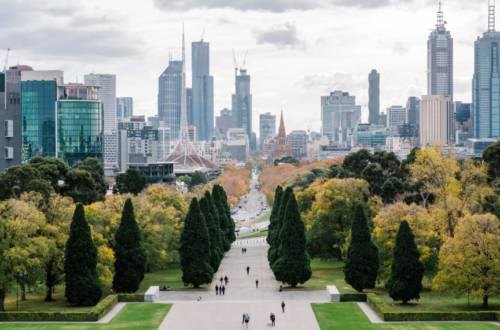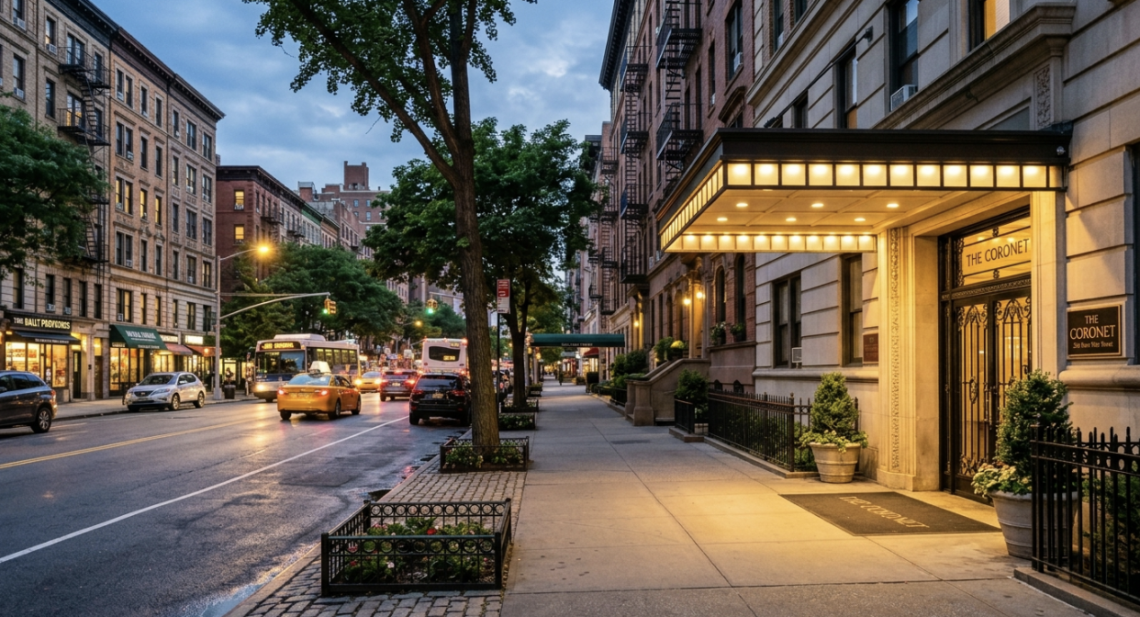
A well-lit residential street on Manhattan’s Upper West Side—one of the city’s most family-friendly and security-conscious student neighbourhoods. Photo: Unsplash
There’s a particular kind of anxiety that sets in around late spring—when acceptance letters have been opened, tuition deposits sent, and the reality of shipping your teenager to New York City begins to feel uncomfortably real. You’ve done your research on universities. But have you done your research on the block your child will be living on?
In 2026, the conversation around student accommodation in Manhattan has evolved significantly. Campus proximity still matters, of course. But for parents writing the cheques, a second set of questions now ranks just as highly: Is the building staffed around the clock? Does it have a smart-access entry system? Is the surrounding neighbourhood walkable and actively monitored? These aren’t paranoid questions—they’re the right ones.
Why the Neighbourhood Matters as Much as the Campus
Manhattan is a city of microclimates. Two blocks can mean the difference between a well-policed, resident-dense area with constant foot traffic and a quieter stretch where a first-year student walking home at midnight is more exposed than they should be. The neighbourhoods that consistently attract safety-conscious parents—and increasingly, safety-conscious students—share a handful of characteristics: density of residential buildings with full-time staff, active street life well into the evening, strong transit links so students aren’t relying on rideshare apps at 2 a.m., and close proximity to commercial corridors that keep the area alive after dark.
The neighbourhoods that tick those boxes most reliably right now are the Upper West Side, Chelsea, the Upper East Side, and—for those whose budgets stretch accordingly—Tribeca. Each has its own character, but all share the fundamental quality that parents most want for their children: a community that functions, and a built environment that supports it.
The Upper West Side: Institutional, Walkable, and Genuinely Safe
Ask any New Yorker where they’d send their own kid to live as a student, and a significant number will say the Upper West Side without pausing. It sits between Central Park and Riverside Park, anchored by Columbia University to the north and a cluster of performing arts schools and research institutions scattered throughout. The streets are wide, the subway coverage is excellent, and the community has long been dominated by professionals, academics, and established families—which means the area attracts a certain kind of resident and a certain kind of building management.
Purpose-built student residences in this area increasingly come with features that would have seemed excessive even five years ago. Smart-lock entry systems—where access is managed via encrypted key fobs or smartphone apps, with entry logs maintained in real time—are now standard in any building worth considering. Visitor management portals, package reception areas with security cameras, and 24/7 concierge desks are not luxury add-ons; they are baseline expectations in 2026 for any professionally managed student building. The Upper West Side has an unusually high concentration of such properties, partly because the institutional influence of nearby Columbia sets a tone for the kind of residential infrastructure the area supports.
Chelsea: The Case for Living Centrally
Chelsea divides opinion among parents in a way the Upper West Side typically doesn’t. It’s hipper, denser, louder—home to a thriving gallery scene, the High Line, and a stretch of Eighth and Ninth Avenues that never really quiets down. But as a place for students to live safely, it performs extremely well, and its central location is a genuine practical advantage. Students at NYU, FIT, Parsons, and the New School are all within a manageable distance, and the neighbourhood’s commercial intensity means it is consistently active and observed.
What Chelsea offers that quieter residential areas sometimes don’t is visibility. Busy streets are, paradoxically, safer streets. The NYPD’s 10th Precinct, which covers Chelsea, has maintained relatively stable crime statistics over the past three years, and the neighbourhood benefits from the same commercial investment—well-maintained public spaces, security camera infrastructure—that tends to track economic activity. Modern student apartment buildings here have invested heavily in building-level security: biometric entry systems, intercom-linked video monitoring, and on-site management teams who know their residents by name.
What Parents Should Actually Be Looking For in 2026
The checklist has become more specific. It’s no longer enough for a building to have a front desk—the question is whether that desk is staffed continuously, or only during business hours. It’s not enough to advertise “security features”—parents should ask exactly what those features are, whether the access log is auditable, and how visitor entry is controlled after midnight.
Smart-lock systems deserve particular attention. The best implementations in 2026 use rolling encrypted credentials, meaning a student’s phone becomes their key and that key cannot be duplicated or skimmed. Building management can revoke access instantly and maintain a precise record of every entry—useful not just for security, but for the practical reassurance it provides to parents several thousand miles away. Some buildings pair this with an app-based visitor approval system, where a student grants access to a guest remotely and receives a notification when entry occurs. These details matter.
For parents sending their children to study in the United States, safety is the non-negotiable priority. In the most family-friendly areas of Manhattan, there is an unprecedented demand in 2026 for safe, doorman-attended buildings. The quality of the surrounding environment is much more important than just being close to the school. When searching for student housing in NYC, focusing on professionally managed enclaves like Tribeca or the Upper East Side ensures a layer of security that standard private rentals cannot match, providing a tranquil, safe sanctuary in the heart of the city’s academic energy.
Having the Conversation With Your Student
One of the more uncomfortable dynamics in this whole process is the tension between a student’s desire for independence and a parent’s entirely reasonable concern for their safety. The good news is that these two things are not actually in opposition. A well-managed building in a well-chosen neighbourhood doesn’t feel like surveillance or restriction—it feels like a good place to live. Students who feel secure in their home environment tend to perform better academically and socially. That’s not speculation; it’s a pattern borne out across university housing research over the past decade.
The framing that tends to work best is practical rather than protective. Walk through the features of a building together—the entry system, the concierge, the visitor policy—not as constraints but as logistics. Most students, when they actually think about it, would rather have a building that knows who is coming in at 3 a.m. than one that doesn’t. It’s worth having that conversation before the lease is signed.
The Bottom Line
Manhattan is not a monolith. It contains some of the most carefully managed, professionally staffed residential buildings in the world, and it also contains buildings where nobody has changed the front-door lock code since 2019. The difference, for parents doing due diligence from abroad, often comes down to choosing the right neighbourhood and then choosing the right type of building within it.
The Upper West Side, Chelsea, Tribeca, and the Upper East Side consistently offer the combination of safety infrastructure, community stability, and academic proximity that parents most want to see. Within those areas, purpose-built student residences with 24/7 concierge coverage, smart-lock access systems, and professional on-site management represent a categorically different proposition from private sublets or informally managed apartment shares.
The peace of mind that comes from knowing your child is somewhere genuinely well-run is not a luxury. In 2026, it is an achievable baseline—if you know where, and what, to look for.