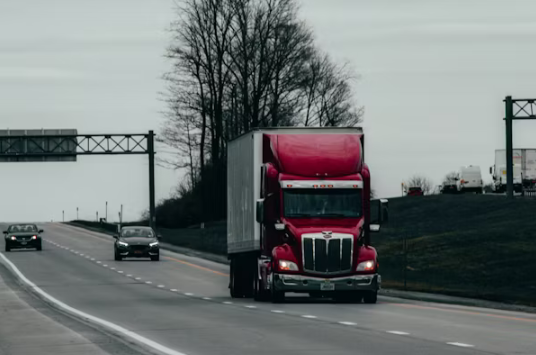
The life of a truck driver has never been simple. In today’s fast-changing world, it is evolving at an unprecedented pace.
Drivers are not only grappling with the conventional requirements of long hours and tight schedules but also adjusting to rapidly changing technological, economic, and regulatory conditions. Meanwhile, new levels of pressure are being placed by increasing consumer demands and more complex supply chains.
Consequently, the work of a truck driver has ceased to be the transportation of goods and has become the management of digital systems, adherence to strict rules and regulations, and the efficient operation of the driver, who must be evaluated at all times.
Now, what is the actual practice of this transformation? What is their impact on the daily life of drivers, the satisfaction with their jobs, and the long-term professional opportunities of the latter?
Below are the latest trends affecting most truck drivers
1. Increasing Use of Technology in Daily Operations
Technology has been integrated into truck drivers’ everyday lives to the point that it has radically changed how they conduct their work. Previously, drivers relied heavily on experience and simple devices.
However, today, drivers use sophisticated systems such as GPS tracking, electronic logging devices (ELDs), and real-time diagnostics, often featured in truck driver news as key indicators of the industry’s ongoing evolution. Consequently, route planning has become more accurate, and unforeseen problems are addressed more quickly.
Moreover, mobile applications are improving communication between dispatchers and drivers and making work easier, such as finding a fuel station or rest area. As a result, efficiency has improved, and fleet management has improved.
However, this heightened reliance on technology implies that drivers need to update their skills continually. This transition may be difficult for some, especially those accustomed to the old ways.
2. Growing Focus on Safety and Compliance
A greater focus on safety and regulatory compliance has marked the trucking industry. These steps are aimed at safeguarding drivers and the population,
The changes help to bring new levels of accountability. Therefore, drivers are now subject to more stringent rules regarding working hours, rest, and vehicle maintenance.
For example, driving time is automatically recorded by electronic logging devices, thereby preventing violations of legal restrictions. Consequently, the risk of fatigue-related accidents is reduced.
However, this change restricts flexibility, making it harder to adapt schedules to real-time conditions. In addition, increased surveillance may foster a sense of being surveilled at all times, an outcome that some drivers find stressful.
3. Rising Demand and Tight Delivery Expectations
The extensive development of e-commerce has already led to a significant increase in demand for trucking services. The delivery time has become the norm rather than the exception as consumer expectations keep increasing. As a result, truck drivers face greater pressure to meet strict deadlines and be accurate and reliable.
Simultaneously, this change has increased last-mile delivery operations. These deliveries also tend to use congested urban routes, unlike conventional long-haul routes, which involve fewer stops. Hence, drivers have to learn to adapt to a more demanding, faster work environment.
On the good side, though, these roles may have less circuitous routes and more predictable times. Nonetheless, a trade-off between speed and safety is always a dilemma, especially in high-pressure situations.
4. Changes in Pay Structures and Job Incentives
Companies are changing their pay structures and incentives, as more are altering their compensation systems to attract and retain talent amid rising demand for drivers. In most instances, higher wages, signing bonuses, and performance-based rewards are being introduced. This has led drivers to earn more than they did in previous years.
Moreover, employers are providing better benefits, such as health coverage, retirement packages, and flexible scheduling. This means that the profession is increasingly becoming attractive to more individuals.
Nevertheless, the issues of job security and workload have remained. Thus, although financial incentives are important, they should be supplemented by enhanced working conditions to achieve long-term satisfaction.
5. Emphasis on Work-Life Balance and Driver Well-Being
There is a growing awareness of work-life balance and well-being. Historically, truck driving has been linked to long periods away from home, but this is slowly changing. Most firms are restructuring routes so drivers can spend more time with their families.
In addition, wellness programs are being implemented to deal with physical and mental health issues. For example, programs aimed at mitigating fatigue and managing stress are increasingly widespread. This helps drivers better maintain their health.
However, it is hard to strike a real balance, especially in a highly competitive industry. Nevertheless, the rise in the emphasis on well-being is a significant step.
6. Transition Toward Sustainable Practices
The concept of sustainability is becoming a major trend across the trucking industry. As environmental concerns become more and more important, there is a push and in some cases a mandate to ensure that companies embrace cleaner technologies. Therefore, there is an increasing use of electric and alternative-fuel trucks.
This transition has its own strengths and weaknesses for drivers. Newer vehicles tend to be more comfortable and efficient on the one hand.
Conversely, they need further training and adaptation to day-to-day practices. For example, trip planning may become complicated due to battery management and the need to find charging infrastructure.
However, with environmental issues remaining a major priority in the industry, drivers will be central to the transition to more sustainable practices.
Conclusion
The forces that influence truck drivers in the modern world are not standalone events; rather, they are intertwined processes jointly transforming the profession. Technological integration and regulatory changes, increasing demand, and sustainability drive each of these factors in significant ways. This means drivers have to deal with a dynamic, in many ways demanding environment that requires flexibility and toughness.