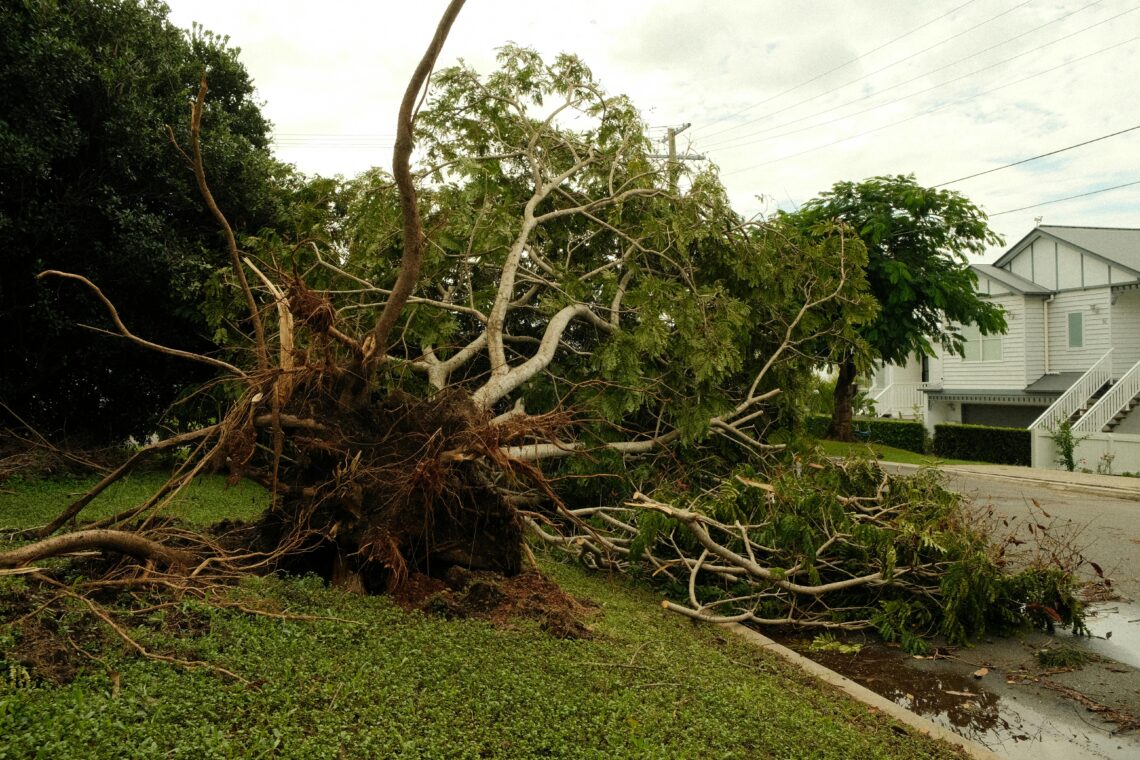
Storms have a way of arriving fast and leaving a mess behind. One minute the sky is just gray and moody, and the next it’s loud, chaotic, and honestly a little scary. And when it’s all over, what’s left behind isn’t just puddles and fallen branches. Your home can be affected in ways that aren’t always obvious at first.
It’s easy to assume that if the roof is still “on” and the windows look fine, everything must be okay. But that’s not always how storm damage works. A lot of it is subtle. It can be hidden under shingles, inside walls, or beneath siding. And sometimes the worst problems are the ones that aren’t seen right away.
But wind isn’t the only culprit. Hail can be incredibly destructive. Even small hailstones can leave dents, cracks, and weak spots that compromise your roof’s integrity. These spots might not leak immediately. In fact, they often don’t. Instead, they quietly deteriorate over time.
And then there’s lightning. Or falling trees. Or gutters that get clogged with storm debris and start pulling away from the house. It all adds up.
Roof Damage: The Most Obvious (But Not Always)
Your roof is usually hit first and hardest during a storm. It’s exposed. It takes the beating so the rest of your house doesn’t have to. But even a roof that looks fine from the ground can be damaged.
Shingles may be loosened. Flashing can be bent or separated. Nails can be pulled upward by pressure changes. These things are often overlooked because they don’t scream “problem” right away. And yet, water intrusion is made much more likely by even small vulnerabilities.
Homeowners are often advised to get inspections after major storms. Companies like C3 Construction are typically called when concerns about roofing damage arise, especially after wind or hail events. A professional eye can catch what most of us would completely miss.
But here’s the tricky part: sometimes damage is denied by insurance because it’s considered “wear and tear.” That’s frustrating. Really frustrating. Which is why documentation and timely inspections are so important.
Water Damage: Quiet and Persistent
Water is sneaky. It doesn’t just drip dramatically from the ceiling like in movies. Most of the time, it creeps. It spreads slowly. It stains drywall in faint yellow patches that grow larger over weeks.
Insulation can be soaked and remain wet for a long time. Mold can begin to grow in as little as 24 to 48 hours under the right conditions. And it’s not always visible mold, either. It can be behind walls, under flooring, or inside HVAC systems.
And the smell? It might be the first real clue. A musty odor that seems very faint at first. Then stronger. Then impossible to ignore.
But water damage doesn’t just affect walls and ceilings. It can weaken structural beams if exposure is prolonged. Wood can rot. Metal can corrode. Over time, the home’s structural integrity can actually be compromised.
That’s a scary thought. And it happens more often than people think.
Siding and Exterior Issues
Siding is often underestimated. It’s seen as cosmetic. Decorative, almost. But it plays a very real role in protecting your home from moisture and pests.
During a storm, siding can be cracked by flying debris. It can be loosened by wind. Gaps can be created where water is allowed to sneak in. And once water gets behind siding, it can sit there. Trapped.
The damage might not be noticed until paint begins to bubble or interior walls show signs of staining. By then, the repair may be more extensive than it would have been earlier.
And don’t forget about soffits and fascia. These parts of your home are easily damaged by high winds. When they’re compromised, ventilation can be affected. Animals can get in. Moisture can build up in the attic.
It’s all connected, in ways that aren’t always obvious.
Foundation and Drainage Problems
Here’s something that isn’t talked about enough: storms can affect your foundation.
Heavy rainfall can oversaturate the soil around your home. When that happens, pressure is placed against the foundation walls. Cracks can form. Existing cracks can widen. And water can be pushed into basements or crawl spaces.
And if your gutters aren’t directing water away properly? That makes it worse. Water pooling near the base of your home is really not a good thing. Over time, erosion can occur. The soil can shift. The foundation can settle unevenly.
That kind of damage isn’t cheap to fix. It just isn’t.
Electrical and HVAC Concerns
Storm damage isn’t just about what’s visible outside.
Power surges caused by lightning strikes can damage appliances and electrical systems. Wiring can be compromised. Circuit breakers can be tripped or damaged.
HVAC units that are located outside are particularly vulnerable. Hail can dent condenser coils. Debris can clog components. Flooding can short out motors.
And sometimes the damage isn’t discovered until months later, when the system suddenly fails during a heatwave or cold snap. That’s when it really hurts.
Emotional and Financial Stress
Let’s be honest for a second. Storm damage isn’t just physical.
It’s stressful. Very stressful. Insurance claims can feel overwhelming. Contractors may be hard to schedule after a big regional storm. Costs can rise due to demand. It’s a lot.
And there’s the uncertainty. Is everything fixed properly? Was something missed? Will another storm make it worse?
Those questions can linger.
But taking action quickly can make a big difference. Inspections can be scheduled. Temporary repairs can be made. Documentation can be gathered. The more proactive you are, the more control you’ll feel.
What Can Be Done After a Storm?
First, safety should be prioritized. Downed power lines should be avoided. Structural damage should be assessed from a distance. If something looks unstable, it probably is.
Photos should be taken. Notes should be written. Insurance providers should be contacted as soon as possible. And reputable contractors should be consulted.
But maintenance before storms matters, too. Trees should be trimmed. Gutters should be cleaned. Roof inspections should be done periodically, even when the weather has been calm.
Storms are unpredictable. But preparation doesn’t have to be.
Your home is more than just walls and a roof. It’s where life happens. So when it’s impacted by a storm, it feels personal.
Damage can be obvious. Or it can be hidden. It can show up right away. Or months later. And sometimes, it’s really a combination of all those things.
But awareness helps. Knowing what to look for. Understanding how different parts of your home can be affected. Being willing to act quickly.
Storms will always come. That part can’t be controlled. But how is their impact handled? That’s where homeowners still have power. And that’s something worth holding onto.
Read More: Preparing Your Home for Spring Without the Stress