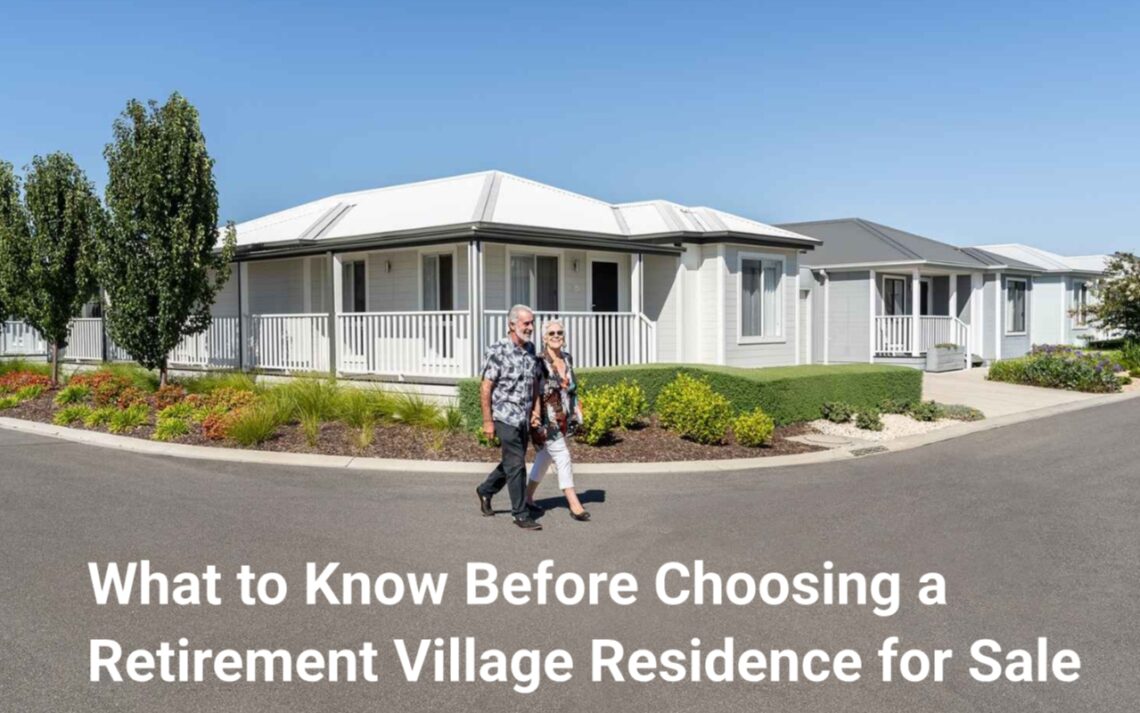
Buying a retirement village residence for sale is probably one of the biggest decisions you’ll make in later life, and it’s way more complicated than regular home buying. You’re not just purchasing property, you’re joining a community with specific rules, fees, and lifestyle implications that affect everything from who can visit to what happens when you eventually need to sell or if you pass away. The contracts can run 50 to 100 pages of legal language covering scenarios most people never consider. Many retirees jump in based on how nice the model units look without really understanding the financial structure or long-term obligations they’re signing up for. Taking time to research thoroughly, ask uncomfortable questions, and maybe even talk to current residents who aren’t part of the official tour can save you from major regrets down the road.
Understanding Different Ownership Models
Retirement villages use several different structures that fundamentally change what you’re actually buying. Some operate on a strata title or freehold basis where you own your unit outright, similar to a regular condo. Others use a license-to-occupy arrangement where you don’t own the property but have the right to live there, kind of like a long-term lease.
Loan-license schemes are popular in Australia and New Zealand, where you pay a large upfront amount (sometimes called an ingoing contribution) to secure your residence, but you don’t own it. When you leave, you get most of that money back, but the village typically keeps a percentage (deferred management fee) that increases the longer you stay. This can be 20% to 40% of the entry price, which shocks people who didn’t read the fine print. Each model has different tax implications, estate planning considerations, and resale processes.
Monthly Fees and What They Actually Cover
Pretty much every retirement village charges ongoing monthly fees on top of your purchase price or entry contribution. These fees supposedly cover maintenance, insurance, grounds care, and shared amenities. But the amount varies wildly, from $300 to over $1500 per month depending on the village and what’s included.
Read the breakdown carefully. Some villages include utilities, others don’t. Emergency call systems might be included or cost extra. Access to facilities like pools, gyms, or community centers could be in the base fee or require additional charges. And here’s the kicker: these fees usually increase annually, often by CPI plus 1% or 2%. Over 20 years, your monthly costs could double or triple. Make sure you can afford not just today’s fees but what they’ll likely be in 10 or 15 years.
Deferred Management Fees and Exit Costs
This is where retirement villages get expensive in ways people don’t expect. Many villages charge a deferred management fee (DMF) when you leave, calculated as a percentage of your entry price or the resale price. It might start at 5% after the first year and increase by 5% each year up to a cap of 30% to 40%.
So if you paid $400,000 to enter and leave after six years, you might owe 30% of that as a DMF, which is $120,000. If the unit sells for $450,000, you might get back your $400,000 minus the $120,000 DMF minus any capital gains the village claims, potentially leaving you with less than you started with even though property values increased. Some contracts also require you to keep paying monthly fees until your unit sells, which could take months or longer in a slow market.
Village Rules and Lifestyle Restrictions
Retirement villages operate under their own rules that can be surprisingly restrictive. You might not be able to have pets, or only certain sizes or types. Visitors might have limits on how long they can stay. Some villages restrict renovations or even what you can display on balconies.
Age requirements matter too. Usually, one person in the household must be over 55 or 60, but what happens if you want your adult child to move in temporarily to help care for you? Many villages don’t allow permanent residents under the minimum age. The rules around selling can be strict as well, with the village often controlling the sales process, setting prices, and taking their time, which can be frustrating if you need to move quickly for health reasons.
Access to Services and Level of Care
Figure out what level of care is actually available if your health declines. Some villages are independent living only, meaning if you need significant assistance, you’ll have to move again. Others have on-site aged care facilities or home care services available, which lets you age in place within the same community.
Check whether transitioning to higher levels of care is guaranteed or subject to availability and additional costs. Some villages prioritize existing residents for aged care spots, others operate on a waitlist like anywhere else. Emergency response systems are standard, but what happens after you press the button? Is there staff on-site 24/7 or does it call an external service?
Contract Terms and Legal Obligations
The contract for a retirement village is not like a regular real estate purchase agreement. Get a lawyer who specializes in retirement living contracts to review it before you sign anything. They’ll spot clauses that could cause problems down the road.
Pay attention to capital gains sharing provisions. Some villages take a percentage of any increase in value when your unit resells. Look at the maintenance obligations, are you responsible for certain repairs inside your unit or does the village handle everything? Understand the process if you want to terminate your contract early, it might not even be possible in some cases without proving financial hardship or medical necessity.
Financial Viability of the Village Operator
Do some research on the company or organization running the village. How long have they been operating? Are they financially stable? Have there been complaints filed with consumer protection agencies? Large, established operators with multiple villages have more stability than single-site operators who might struggle if occupancy drops.
Ask to see the village’s financial statements and occupancy rates. High turnover or lots of empty units might indicate problems with resident satisfaction or the village’s reputation. Some villages have ended up in financial difficulty, leaving residents uncertain about whether services will be maintained or fees will spike to cover shortfalls.