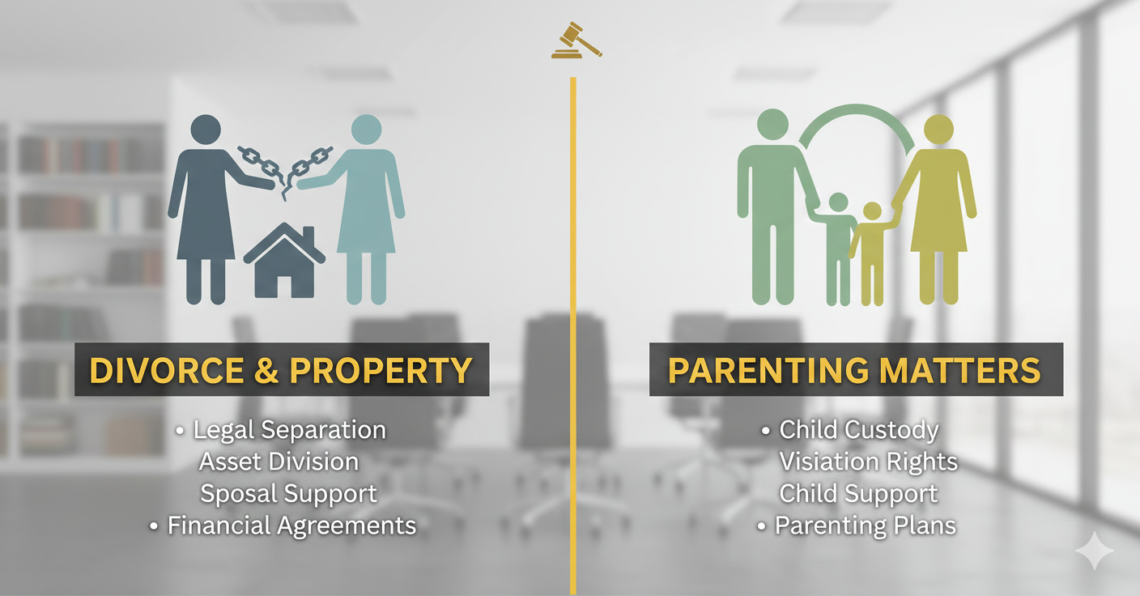
Few life events feel as overwhelming as the end of a relationship. Alongside the emotional weight, there are practical decisions to make—about property, finances, and children. It’s a lot to carry at once, especially when everything feels uncertain.
Family law exists to bring structure to these moments. It doesn’t remove the emotional challenges, but it does provide a clear framework for resolving practical issues fairly and thoughtfully. When properly understood, family law helps people move forward with clarity rather than confusion.
Divorce: Creating a Legal Line Between Past and Future
Divorce is often the first step people associate with family law, but it’s important to understand what it does—and what it doesn’t do.
Legally, divorce is the process of formally ending a marriage. It confirms that the relationship has broken down and allows both people to move forward independently. In many systems, divorce itself doesn’t automatically resolve financial or parenting arrangements. Instead, it creates a legal foundation for addressing those matters.
Think of divorce like closing one chapter of a book. It doesn’t rewrite what came before, but it allows the next chapter to begin.
The principles behind family law focus on fairness, clarity, and the well-being of everyone involved. Divorce provides legal certainty so that future decisions—about property, finances, and children—can be made with clear boundaries.
Property Matters: Dividing What Was Built Together
One of the most complex aspects of separation is deciding what happens to shared property. This can include homes, savings, superannuation, debts, and even business interests.
Family law doesn’t assume everything is split evenly by default. Instead, it considers factors such as each person’s contributions, future needs, and the overall circumstances of the relationship.
This approach is similar to how business partnerships dissolve. Assets and responsibilities aren’t divided randomly—they’re assessed based on contribution, risk, and future obligations.
Family law provides a structured framework for fairly assessing property, reducing the likelihood of long-term disputes. Clear agreements help people move on financially without ongoing uncertainty or conflict.
Parenting Matters: Prioritising Stability for Children
When children are involved, family law prioritises their well-being in all decisions. Parenting arrangements are designed to support stability, safety, and meaningful relationships with both parents where possible.
Rather than focusing on parental “rights,” family law focuses on responsibilities—what arrangements best support a child’s emotional and practical needs.
This is similar to how schools or healthcare systems prioritise children’s best interests when making decisions. The goal isn’t to favour one adult over another, but to create environments where children can continue to thrive.
Clear parenting arrangements also reduce conflict by setting expectations. When routines, responsibilities, and communication are defined, it’s easier for parents to cooperate and plan ahead.
Why Structure Matters During Emotional Change
During separation, emotions often run high. Stress, uncertainty, and grief can make decision-making harder. Family law provides a neutral framework that helps separate emotion from action.
This structure is valuable. It’s similar to having clear procedures in place during a workplace dispute or a financial audit. The rules don’t remove emotion, but they prevent situations from escalating unnecessarily.
By providing timelines, legal definitions, and processes, family law helps ensure decisions are made deliberately rather than reactively.
Avoiding Ongoing Conflict Through Clear Agreements
One of the most important roles of family law is preventing future disputes.
Unclear or informal arrangements often lead to misunderstandings later. What feels manageable in the short term can become problematic as circumstances change—new relationships, job changes, or children growing older.
Family law encourages clear, legally recognised agreements that anticipate change. These agreements create certainty and reduce the risk of repeated conflict.
In other industries, contracts serve the same purpose. They’re not about distrust—they’re about clarity.
Support That Adapts to Different Situations
No two families are the same. Some separations are amicable, others are more complex. Some involve significant assets, others focus primarily on parenting.
Family law is flexible enough to accommodate these differences. It allows for negotiation, mediation, and court processes when necessary. The aim is always to resolve matters in a way that’s proportionate to the situation.
This adaptability is one reason professional guidance is so valuable. Knowing which pathway suits your circumstances can save time, stress, and emotional energy.
Knowing When to Seek Guidance
Many people delay seeking information because they feel overwhelmed or unsure where to start. But understanding the process early often makes things easier, not harder.
Learning how divorce, property, and parenting matters are managed allows people to plan rather than react. It turns unknowns into known steps.
If you’re navigating separation and want a clearer understanding of how these processes work together, you can get more details to explore how structured legal guidance helps manage divorce and related matters with clarity and care.
Long-Term Thinking Makes a Difference
Family law decisions don’t just affect today—they shape the years ahead. Property arrangements influence financial stability. Parenting agreements affect daily routines and long-term relationships.
That’s why family law emphasises sustainable outcomes rather than quick fixes. The goal is to help people build workable futures, not just end relationships.
This long-term mindset is common in fields such as urban planning and business strategy. Decisions are evaluated not just for immediate impact, but for how they hold up over time.
Bringing Order to a Difficult Transition
Separation is rarely easy, but it doesn’t have to be chaotic. Family law provides a pathway through uncertainty by offering structure, fairness, and predictability.
It helps people understand their options, make informed decisions, and protect what matters most—especially children.
Rather than being something to fear, family law can be seen as a support system during one of life’s most challenging transitions.
Moving Forward With Confidence
At its best, family law isn’t about conflict—it’s about resolution. It helps people close one chapter with dignity and begin the next with confidence.
By managing divorce, property, and parenting matters within a clear legal framework, family law turns complexity into manageable steps. It replaces uncertainty with understanding and helps families move forward in healthier, more stable ways.
And when life changes unexpectedly, that clarity can make all the difference.
You May Also Like
From Notes to Short Videos: A Smarter Way to Study With GoEnhance AI