The crisp winter air has settled in, bringing with it cozy sweaters, warm drinks… and a familiar, uncomfortable dryness. Your skin feels tight, you wake up with a scratchy throat, and maybe you’ve noticed your little one is more prone to stuffy noses or restless sleep. Like many health-conscious parents, you’ve likely invested in a humidifier to combat these issues. It’s whirring away in the nursery or living room, a modern guardian against the arid indoor air. But here’s a question many families don’t think to ask: If you’re already running a humidifier, do you really need an indoor hygrometer?
The short, crucial answer is yes. Think of your humidifier as a diligent worker, tirelessly adding moisture to the air. But without an indoor hygrometer, a device to measures humidity levels, that worker is operating blindfolded. You might be adding too little moisture, leaving dryness problems unsolved. Or, more worryingly for your family’s health, you might be adding too much, creating a whole new set of issues.
Why Humidity Matters So Much in Winter
During cold months, indoor air often becomes too dry because heating systems suck out moisture. Ideally, indoor humidity should stay between 30% and 50%. Within this range, people tend to breathe easier, sleep better, and experience fewer allergies or dry skin problems.
Too little humidity can cause:
- Dry throat, itchy eyes, and cracked lips.
- Respiratory irritation or worsened cold symptoms.
- Stuffy noses and sinus issues, especially for children.
- Static electricity that shocks you when touching metal surfaces.
On the other hand, too much humidity isn’t good either. When the air gets overly moist (above 60%), mold and dust mites start thriving, which can trigger allergies or asthma symptoms.
So, keeping humidity balanced is key, and that’s something a humidifier alone can’t automatically manage without feedback.
The Humidify Doesn’t Tell You When to Stop
Let’s start with why you got a humidifier in the first place. For young families, the benefits are tangible:
- Soothes Dry Symptoms: It alleviates dry skin, chapped lips, irritated nasal passages, and that persistent winter cough.
- Protects Little Ones: For babies and toddlers, proper humidity can make breathing easier, reduce congestion, and may even help lower the survival rate of some airborne viruses.
- Improves Sleep: Moist air is easier to breathe, leading to more restful sleep for both children and parents.
- Preserves Your Home: It can prevent wood furniture and flooring from cracking and reduce static electricity.
However, the “set it and forget it” approach has a significant downside. Humidity is a Goldilocks scenario, which means you need it to be just right. The Environmental Protection Agency (EPA) recommends maintaining indoor relative humidity between 30% and 50%. Venturing outside this range invites trouble:
- Too Low (<30%): The problems your humidifier was meant to fix persist.
- Too High (>50%): This creates a breeding ground for dust mites, mold, and mildew. These allergens can trigger asthma and allergy symptoms, especially in children. It can also cause condensation on windows, damaging walls and sills.
Your humidifier alone cannot tell you where you stand on this spectrum. You’re essentially guessing.
Why an Indoor Hygrometer Thermometer Is Essential
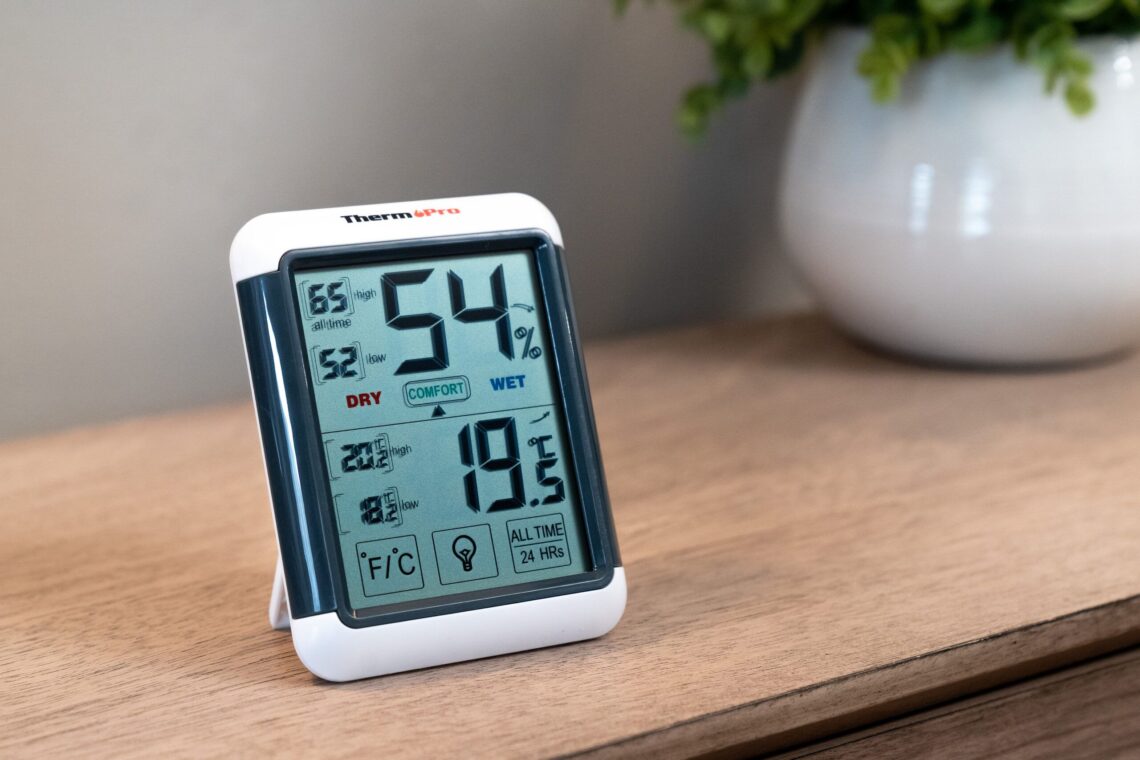
An Indoor hygrometer measures indoor humidity levels in the air, while a thermometer measures temperature. Many modern devices combine both functions into one compact digital unit, that is Hygrometer thermometer.
By placing a hygrometer thermometer in your living room or your child’s bedroom, you can know the exact humidity and temperature at any time. This helps you:
- Adjust your humidifier for optimal comfort.
- Spot areas that are too dry or too damp.
- Track how heating or weather changes affect your indoor environment.
It’s like having a mini weather station inside your home, simple, but incredibly useful for any family that cares about air quality and comfort.
Think of your humidifier as a water source and your hygrometer as a guide. The two work best together.
Here’s how they complement each other:
- Feedback Loop: A digital hygrometer tells you when your air is too dry or too damp. You can then adjust your humidifier’s settings to balance it.
- Prevention: By monitoring humidity, you can prevent mold and dust mites from developing.
- Energy Savings: Comfortable humidity levels make your home feel warmer, allowing you to lower the thermostat slightly and save on heating costs.
- Better Sleep: Balanced air moisture helps babies (and adults) sleep more soundly without nasal congestion or dry coughs.
When used together, they make your indoor environment more comfortable, healthier, and energy-efficient.
For families with children, the indoor thermometer hygrometer helps you:
- Know exactly when to turn the humidifier on or off
- Avoid over-humidifying your child’s room
- Maintain stable conditions for better sleep
- Make informed decisions instead of guessing
Why We Recommend the ThermoPro TP358 Bluetooth Indoor Thermometer Hygrometer
For busy families who want smart, effortless monitoring, a basic hygrometer might not be enough. You need something that fits seamlessly into your connected life and gives you peace of mind. This is why the ThermoPro TP358 Bluetooth Indoor Thermometer Hygrometer stands out as an exceptional choice. It’s a powerful humidity and temperature monitoring hub designed for modern, health-focused households.
Here’s why it’s the perfect partner for your humidifier:
- Remote Monitoring from up to 260ft away: This is its superpower for parents. Place the TP358 in a room, like your baby’s nursery, and connect it via Bluetooth to your smartphone using the intuitive ThermoPro Connect App. You can check the real-time temperature and humidity from your living room, kitchen, or even your bed without disturbing your sleeping child. No more cracking the door and risking a wake-up!
- Unmatched Data Tracking: The app doesn’t just show you the current reading. It logs historical data, allowing you to see trends over hours, days, or months. Is the room consistently drier on windy nights? Does humidity spike after a bath? This insight helps you fine-tune your environment perfectly.
- Customizable Alerts for Peace of Mind: Set personalized comfort zones for temperature and humidity. If the nursery drops below 40% humidity or gets too warm, the app will send a push notification directly to your smartphone. This proactive feature lets you address issues immediately, ensuring your little one’s environment is always safe and comfortable.
- High Accuracy & Clear Display: It provides reliable, professional-grade temperature and humidity readings so you can trust the data. The device itself has a clear, backlit screen for easy at-a-glance checks.
- Perfect for the Whole Family: While ideal for a nursery, its utility extends to any room. Monitor the living area, your home office, or even a guitar room to protect valuable instruments from dry air.
How a Hygrometer and Humidifier Work Best Together
When you’re using both the hygrometer thermometer and the humidifier together, these two devices create a simple system for a healthier home.
Step 1: Monitor First
Place your hygrometer thermometer properly. Keep it at eye level in the main living area or bedroom, away from direct sunlight or vents. Check your indoor humidity and temperature before turning on the humidifier.
Step 2: Run your humidifier normally
Run your humidifier normally. Check the humidity reading after 30-60 minutes to see changes. Aim for 40-50% humidity in winter. This range prevents dryness while discouraging mold.
Step 3: Adjust Gradually
Watch how humidity levels change over time. Every home reacts differently depending on room size, insulation, and heating.
Step 4: Turn It Off When Needed
If humidity drops below 30%, increase your humidifier setting. If it rises above 55%, lower it or turn off your humidifier for a while.
This simple routine helps protect your children’s comfort and health all winter long.
Extra Tips for a Healthier Indoor Environment
- Ventilate daily: Open windows for 5-10 minutes, even on cold days, to refresh indoor air.
- Keep your humidifier clean: Wash the tank and filters weekly to avoid mold growth or mineral buildup.
- Group your plants: Houseplants naturally release moisture and can slightly raise humidity.
- Use multiple hygrometers: For multi-room homes, place one in each main area to track different humidity levels.
- Consider insulation: Well-insulated windows and doors help retain warmth and stable humidity.
These small steps make a big difference in keeping your family healthy and comfortable through dry winter months.
Read More: Power Anywhere: Rethinking Energy Access with a Portable Power Station
Final Thoughts: Create a Healthier Home for Your Family
As a parent, you’re already doing a lot to keep your children safe and comfortable. Managing indoor air quality is just another part of that care, especially during winter.
A humidifier helps, but it works best when paired with an indoor hygrometer thermometer that tells you exactly what your home needs.
By combining a humidifier with a reliable device like the ThermoPro TP358 Bluetooth Indoor Thermometer Hygrometer, you gain control, confidence, and peace of mind, knowing your family is breathing air that supports better sleep, comfort, and health.