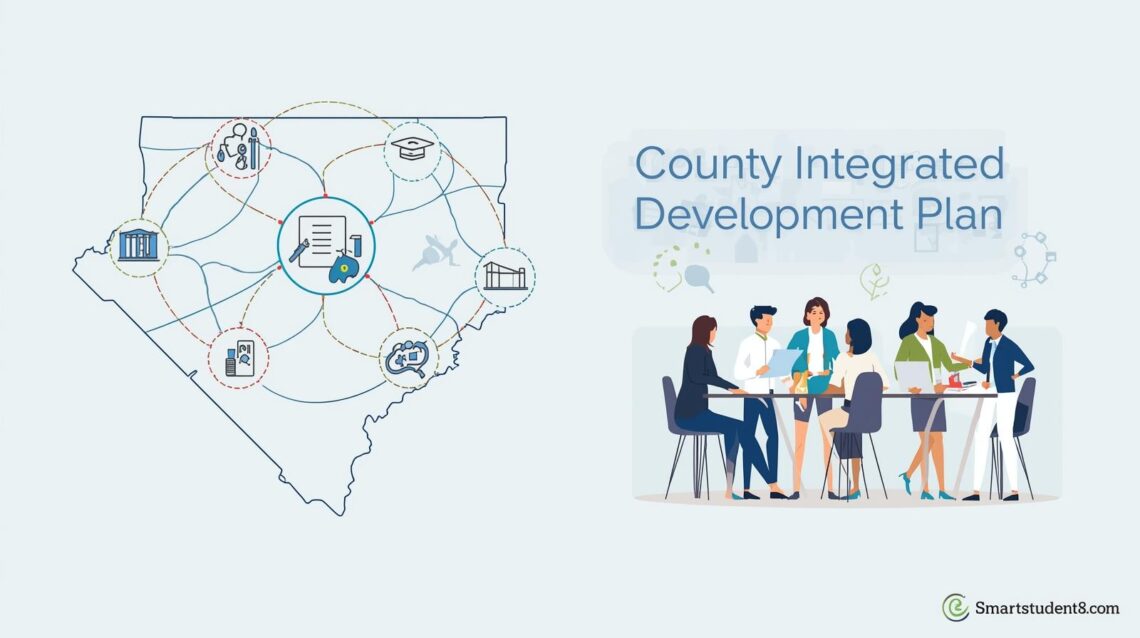
The County Integrated Development Plan (CIDP), also known as a County Integrated Development Strategy, is the nerve centre of progress and local government. This is a five-year document that outlines the vision, goals, and development roadmap of a particular county. The plan, which is legally required, is more than a set of ideas. It is an integrated framework for planning, budgeting and implementing projects in a particular county. The CIDP integrates various sectors, from infrastructure to economic growth, social services, and environmental management, ensuring that the development is efficient and coordinated with community needs. The plan is a blueprint that ties long-term goals to practical year-to-year steps to achieve them. Residents, community groups, and business owners who want to influence and engage with the future of their area should understand this plan.
The article provides a detailed exploration of the County Integrated Development Plan. This article will explore its purpose and importance, as well as its components. We will also examine the lifecycle of a CIDP, from creation through review and implementation. We will break down the entire process and explain the importance of budget alignment and public participation. This workshop aims to demystify the powerful tool for local governance and equip you with the knowledge to actively participate in your county’s development journey.
What is a County Integrated Development Plan?
A County Integrated Development Plan, at its heart, is a plan that combines all the aspects of a County’s growth into a cohesive, single strategy. Imagine it as an elaborate business plan spanning five years. The primary purpose of the plan is to give direction and ensure that all activities are carried out in a coordinated manner. It also makes sure that no project can be implemented without coordinating with others. The integrated approach will prevent a situation in which the transportation department builds a new road without considering where housing development planned by the housing ministry is located. The CIDP harmonizes goals across different departments, such as education, health, and agriculture, into a unified vision. This creates synergy and maximizes impact.
In many areas, this strategic document has legal force. This means that public money cannot be used for projects not approved in the CIDP. Its legal force makes it one of the most essential tools in county administration. Planning is transformed from a departmental, fragmented exercise into a holistic approach that takes into account the interconnectedness among all functions of a community. It ensures, for example, that economic development plans are supported by adequate infrastructure and that the social services provided match projected population growth. The CIDP establishes a framework that ensures a county’s future journey is organized and deliberate.
The CIDP development process is cyclical and aligns with a five-year government term. A new leadership group can set its strategic priorities during its term. It is a dynamic document, not a static plan. The plan is reviewed annually to evaluate progress, make data-driven changes, and respond to new opportunities or challenges. The county can stay on track to achieve its vision while still adapting to new circumstances. The CIDP essentially provides the long-term strategy and operational guidelines necessary to turn that vision into tangible results for the community.
The Importance and Criticality of the Integrated Development Objectives
A County Integrated Development Plan is important because it can foster a structured, sustainable, and equitable growth. A County Integrated Development Plan is essential to fostering sustainable, structured, and equitable growth. This process is brought under control by the CIDP, which establishes a series of goals for integrated development to guide all decisions. The CIDP provides an accountable and transparent roadmap to which all parties, such as government officials, investors and the general public can refer. Clarity is key to building trust and ensuring that all parties are working toward the same goals. This prevents duplication and makes sure that residents get the most out of public investment.
A well-crafted CIDP can also be a powerful tool for attracting investment. Investors from the private sector and international or national development partners will be more likely to invest in a country with a clearly defined, legally sound development strategy. It demonstrates fiscal responsibility and provides evidence that the county is committed to a vision for long-term success and has an effective plan. The plan outlines projects and provides cost and implementation date estimates, increasing project bankability while reducing investment risk. The CIDP aligns all efforts to signal to potential investors that the county is a reliable, stable place to invest. This will unlock economic opportunities and speed up progress.
The importance of CIDP for residents cannot be understated. The CIDP is the primary mechanism by which residents’ needs and priorities can be translated into action on behalf of the government. It ensures development does not happen for its own sake, but is aimed at improving the quality of life for all members of the community. The CIDP identifies priority projects, such as building schools, updating healthcare facilities, improving water and sanitation systems, or creating jobs. The plan is a key element of democratic accountability because it links community goals, county planning and budget allocations.
The Key Components in a Comprehensive CIDP
The County Integrated Development Plan (CIDP) is a multifaceted, detailed document that provides a comprehensive picture of a county’s development landscape. The plan usually begins with an in-depth situational analysis. The foundation for the plan is this section, which presents a rich assessment of current county conditions. This section includes information on demographics, economic indicators, existing infrastructure such as roads and utilities, and social services such as health and education. These baseline data help identify county strengths, weaknesses, opportunities and threats. They provide a solid foundation for subsequent planning and decisions.
The plan outlines the county’s long-term mission and vision following the analysis. The document’s forward-looking section outlines county leaders’ aspirations over the next five to ten years. While the vision is an overarching statement of the desired future, the mission outlines the county’s purpose and how it will achieve that vision. Strategic objectives provide more detailed, quantifiable goals that break the mission down into achievable targets. The strategic objectives section is vital for aligning stakeholders and providing direction for subsequent sectoral strategies.
The CIDP’s core is the detailed sectoral strategy and portfolio of projects and programs. The plan includes specific strategies in key areas such as economic development, agriculture, health, transportation, and education. The strategies have been integrated to complement each other. The plan defines a specific portfolio of projects and programs for each strategy to help achieve stated objectives. The plan includes detailed project descriptions, estimated costs, implementation timelines, and the government departments responsible for execution. This section effectively translates the vision at a high level into a tangible, actionable plan of work for the county government.
Planning and Formulation Process
A County Integrated Development Plan (CIDP) is a highly participative and structured process that ensures the document reflects a broad consensus. It is common for the journey to begin shortly after a county’s new administration assumes office. National guidelines outline required timelines and procedures. First, the data is collected and analyzed to provide the basis of the plan. During this phase, technical teams of various county departments work together to collect and analyze data on demographics, economics, social and environmental issues. The county plan will be grounded in evidence, not assumptions, if this deep dive into its reality is done.
The CIDP’s emphasis on public participation in its development is a key feature. By law, county governments must provide meaningful opportunities for citizen input, community groups, and stakeholders. It is essential to ensure the plan aligns with the needs and concerns of those it’s meant to help. Residents can express their opinions, offer suggestions, and shape the development agenda through public forums held across the county. The consultations will help to build public support for the plan and foster a shared sense of responsibility.
After analyzing data and gathering public feedback, technical teams begin drafting various sections, ranging from vision and objectives to sectoral strategies and even project proposals. The public is asked to provide feedback on the draft and validate it. The draft CIDP is presented to the public for a second round of feedback and validation. The document will be finalized after incorporating the final round of public input. It is then submitted to the County Assembly for formal approval and debate. The CIDP is granted legal status and becomes the guiding framework for county activities over the next five years.
Aligning the CIDP Budget with the County Budget
The County Integrated Development Plan (CIDP) and the county budgets are interdependent. One cannot operate effectively without the others. The CIDP serves as the guide for strategic development and identifies the “what”, “why”, and “how”, while the county budget provides financial resources. Public finance management has as a core principle that public money cannot be spent outside the planning framework. Every item of the annual county budget must be aligned with a priority or program outlined in CIDP. The direct alignment of the county budget ensures purposeful, strategic spending. It also directly contributes towards achieving long-term county goals.
This linkage transforms the budget from an accounting tool into a powerful policy implementation tool. The county government creates an Annual Development Plan each year. This plan extracts directly from the CIDP the programs and projects that will be implemented in the upcoming year. ADP is then used to estimate the budget for each year. The systematic approach ensures financial resources will be directed towards critical priorities identified during extensive analyses and consultations with the public. This prevents spending on projects that may not align with a county’s strategic direction.
The tight integration of planning and budgeting enhances accountability and transparency. The CIDP was developed with citizen input. Residents can monitor how public money is spent and confirm that spending is in line with agreed-upon priorities. The CIDP is a public document that was developed with citizen input. Residents can track how government spending aligns with the agreed-upon priorities. It creates a direct line from the community’s needs through planning priorities, budget allocations, and finally to project implementation. The feedback loop ensures good governance by ensuring that resources allocated to public projects are actually used for the benefit of communities.
What is the role of public participation in development?
The public participation process is more than just a formal step. It is at the heart of the entire County Integrated Development Plan. This is an essential democratic principle that empowers citizens to actively participate in determining their communities’ futures. Public participation is essential to ensure that CIDP does not become a document that’s created from the top down by government officials, but a plan that reflects the real needs, aspirations, and priorities of people. Residents who are allowed to have a voice and participate in identifying local issues and solutions will find that their plan becomes more meaningful, effective, and more likely to be supported by a broad range of people during implementation.
The county governments use a variety of methods to encourage public participation. Of course, these methods include conducting public forums, conducting surveys and soliciting written contributions from civil society groups and individuals. These engagement efforts, to be effective, must include all groups of people, such as women, youth, people with disabilities, and marginalized community members. Information about the planning process, such as meeting dates and draft documents, must be widely accessible in languages and formats that are easily understood. It is essential that everyone has the same opportunity to participate and that the plan meets the needs of everyone in the county.
Public participation is beneficial beyond planning. Citizens who feel heard and whose input has been incorporated into the plan’s final version develop a strong sense of ownership. Shared ownership may translate to active support in the implementation phase. Residents are more likely to be willing to participate in the project, monitor progress and contribute resources. This collaborative process also builds trust between the government and citizens. It strengthens social cohesion and fosters a vibrant civic culture. Public participation turns the CIDP into a community pact.
Monitor, evaluate, and review the CIDP.
The County Integrated Development Plan (CIDP) is not a static document created and left to collect dust on a shelf. This dynamic tool is continuously monitored and evaluated to ensure it remains on course and achieves its goals. The CIDP includes a framework for monitoring and evaluation. The framework outlines clear performance indicators for each objective and project. It also defines the data collection method and outlines a schedule for regular reviews. The built-in accountability system allows county governments and the general public to monitor progress, identify bottlenecks and evaluate the impact of their development initiatives.
It is a continuous process that involves collecting and analysing data to determine how projects are progressing relative to the targets set. This process answers such questions as: Is this project on time? Does it fit within the budget? Do the activities follow the plan? Regular monitoring provides managers with early warning, allowing them to spot problems and correct them before they become more serious. Routine performance tracking is usually done quarterly or semi-annually. It is vital for ensuring operational efficiency and for using resources efficiently.
The evaluation, however, is an in-depth, periodic review that assesses the effectiveness, sustainability, and impact of a plan. The evaluation goes beyond tracking the outputs and asks bigger questions, such as: Has the project achieved its intended outcome? How did the intervention affect both anticipated and unanticipated changes? Was the cost justified? Evaluations of the CIDP are usually conducted in the middle and at the end. These evaluations, along with ongoing monitoring data, provide evidence for an annual review of the CIDP. The county can learn from its experiences and make the necessary changes to the plan. This allows them to remain relevant for the entire five-year period of the CIDP.
Challenges and Solutions in CIDP Implementation
Despite its power, implementing a County Integrated Development Plan can be challenging. Lack of resources is one of the biggest obstacles. The counties may have ambitious plans, but their budgets will not allow them to finance all of the projects they prioritize. It can cause delays, incomplete implementation or indefinitely postpone critical initiatives. This causes public frustration and undermines confidence in the planning process. Diversifying funding sources by seeking partnerships with private companies, applying for grants from national and international sources, and developing revenue-enhancing strategies at the local level that don’t burden residents is a possible solution.
A second significant issue is limited technical capability within certain county governments. For a plan to be complex and integrated, it requires high-level expertise across a range of areas, including data analysis, financial modelling, monitoring, and evaluation. A lack of qualified personnel can result in poorly designed projects, poor implementation, and inadequate oversight. To address the issue, counties could invest in professional development programs for their employees, hire advisors, or work with non-governmental and academic organizations. In addition, establishing strong systems and processes within the county can help institutionalize best practices and maintain continuity during staff changes.
Finally, it can be challenging to ensure sustained, meaningful public participation throughout the entire implementation cycle. Public engagement can be strong at the beginning of the planning process, but wanes during implementation and monitoring. It can lead to a disconnection between the government and the community. Citizens may even feel their involvement at the beginning was just a token. To combat this problem, counties need permanent structures that encourage citizen involvement, such as community monitoring teams and public feedback portals. Regular, easily accessible updates about project expenditures and progress can help keep citizens informed. Treating citizens as partners in the process will help counties build trust and collaborate to successfully overcome obstacles and turn the CIDP vision into reality.
Read More: SEO by Highsoftware99.com: A Modern Approach to Search Engine Optimization
Conclusion
The County Integrated Development Plan is a keystone of organized, transparent and accountable local growth. The CIDP helps to transform aspirations and goals into concrete outcomes for all county residents by guiding its vision, aligning sectoral goals and fostering strong ties between budgeting and planning. The CIDP’s structure ensures development does not become fragmented but instead follows a clear, unified path, shaped by accurate information and genuine public involvement. The road to successful implementation can be difficult, marked by financial constraints, technological gaps, and the need to engage citizens. However, the CIDP is an adaptable tool that will overcome any obstacles.
The success of a CIDP ultimately depends on county leaders’ commitment, technical expertise, and, most importantly, active community involvement. All stakeholders must work together to ensure the sustainable development of the county, thereby improving the quality of life. By embracing the principles and process outlined in CIDP, counties can chart a course toward equitable growth and resilience for both current and future generations.