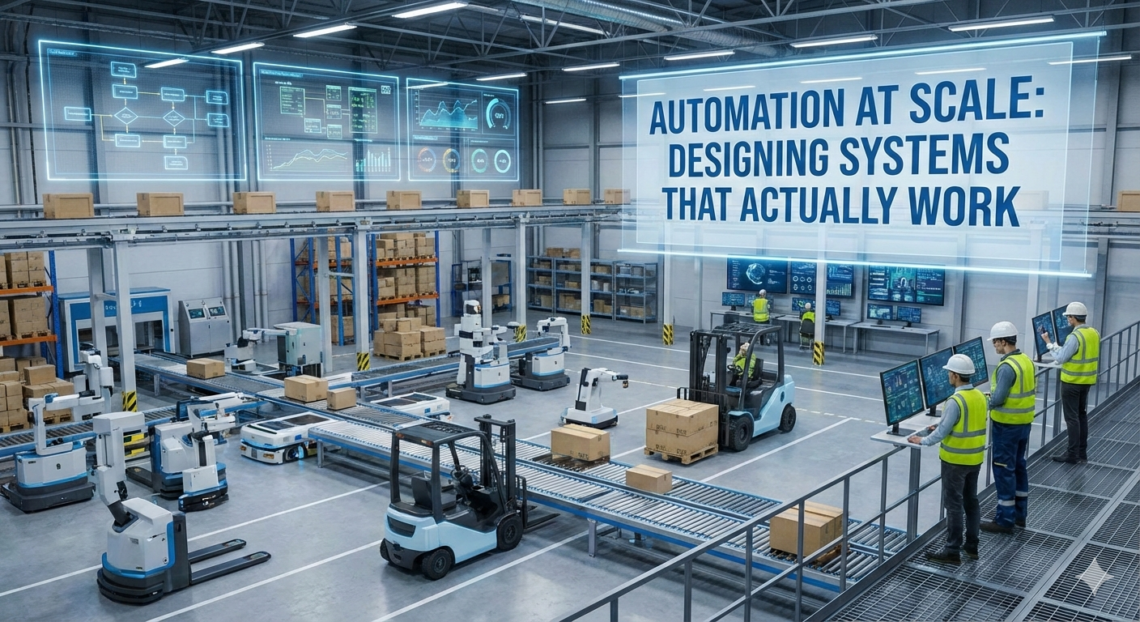
Automation promises speed, consistency, and efficiency. On paper, it sounds perfect: machines that handle repetitive tasks, reduce errors, and free up your team to focus on higher-value work. But many organizations discover that a system that works in theory or in a small pilot doesn’t always perform the same way when scaled up.
Scaling automation successfully requires more than just buying the latest machine. It takes planning, realistic expectations, and designing systems to handle the realities of day-to-day production. Without this, automation can become more frustrating than helpful.
Why Automation Fails at Scale
One of the biggest surprises for companies implementing automation is that small systems often behave differently from large-scale ones. A machine that performs perfectly in a test or demonstration can struggle when put into full operation.
Here are some common reasons automation fails to scale:
1. Unexpected Variability
No matter how controlled your process seems, small variations always exist. Raw materials, product sizes, or environmental conditions can change day-to-day. Automation systems that can’t adapt to these minor differences often fail to deliver consistent results.
2. Hidden Bottlenecks
A machine might be extremely efficient on its own, but create slowdowns when integrated into a full workflow. For example, a fast packaging system won’t improve overall production if the preceding step can’t keep up. Recognizing bottlenecks across the whole process is essential.
3. Overly Complex Setups
Some systems are designed with technical sophistication in mind but are difficult for operators to run or maintain. If the staff struggles to keep the machine running or clean it between batches, productivity can drop rather than improve.
4. Lack of Real-World Testing
Systems that are only tested in ideal conditions rarely survive the unpredictable environment of real production. Scaling requires testing under realistic workloads and considering factors such as staffing changes, shift patterns, and material inconsistencies.
Understanding these risks early is critical. Automation should simplify work, not create new challenges.
Principles for Effective Automation
Machines alone don’t make automation successful. How a system is designed and integrated into a workflow matters just as much. Organizations that succeed with automation often follow several key principles:
1. Design for People, Not Just Machines
Even the most advanced machines depend on human operators. Automation should reduce repetitive tasks without adding complexity for the team. Intuitive controls, easy maintenance, and straightforward workflows are essential. When people can work with machines instead of around them, the system performs reliably day after day.
2. Build for Variability
Production environments are rarely perfect. Inputs can differ in size, shape, or quality, and the system needs to accommodate these changes. Flexible automation helps maintain consistent output even when materials or conditions vary slightly.
3. Focus on Measurable Outcomes
Speed and flashy features are not enough. The true value of automation comes from measurable outcomes such as uptime, product consistency, quality, and reliability. Tracking these metrics helps identify areas for improvement and ensures the system delivers real results.
4. Plan for Growth
Automation should not only solve today’s problems but also scale with your operations. Modular or adaptable systems allow production to expand without requiring a full redesign. A system that performs well for small batches but can’t handle larger volumes will quickly become a bottleneck.
5. Prioritize Ease of Maintenance
Even the best-designed automation can fail if it’s hard to clean, maintain, or troubleshoot. Systems that are easy to maintain reduce downtime and help operators feel confident rather than frustrated. This also extends the lifespan of the equipment and protects your investment.
Real-World Considerations for Scaling Automation
Implementing automation at scale involves more than installing machinery. Success comes from considering the full production environment and the people who work in it.
Workflow Layout
How machines are arranged on the production floor impacts performance. A poorly designed layout can create unnecessary movement, slow production, and add stress to operators. Efficient layouts that minimize handling and optimize flow improve both speed and consistency.
Staff Training and Collaboration
Automation changes how teams work. Operators need proper training to interact with machines effectively. Maintenance staff should know how to troubleshoot and maintain systems. Involving teams in planning and implementation helps prevent errors and ensures everyone is aligned on goals.
Monitoring and Feedback
Regular monitoring of performance allows teams to catch small issues before they become large problems. Feedback loops between operators and management ensure the system continues to improve over time.
Learning from Industry Leaders
Even outside specific industries, the same principles apply. Companies like Sorting Robotics have shown the value of designing automation for real-world production conditions rather than idealized setups. Their custom robotics integration services highlight how systems can be tailored to fit actual workflows, helping teams achieve reliable and repeatable results. Focusing on human interaction, measurable outcomes, and adaptability helps systems succeed at scale.
Automation isn’t just about replacing manual labor; it’s about creating reliable, repeatable processes that make operations more predictable and efficient. Leaders who focus on design principles and long-term usability find that automation becomes a tool for growth, not a source of frustration.
Key Takeaways for Successful Automation
Scaling automation isn’t just about adding machines. It’s about designing systems that actually work day to day. Here are some practical points to keep in mind:
- People First: Machines are only part of the system. Design workflows that make life easier for the team.
- Expect Variability: Build systems that can handle inconsistencies in materials, products, and conditions.
- Measure Real Results: Focus on uptime, consistency, and quality and not just speed.
- Plan to Scale: Choose adaptable systems that grow with your production needs.
- Keep It Maintainable: Easy-to-clean and easy-to-maintain systems are more reliable over time.
By keeping these principles in mind, organizations can avoid the common pitfalls of automation and design systems that actually work at scale.
Practical Lessons for Scaling Automation Successfully
Automation has the potential to transform operations, but only when it’s designed with the realities of production in mind. The difference between systems that work and systems that fail is often not technology, it’s planning, design, and adaptability.
When automation is implemented thoughtfully, it becomes a reliable part of the workflow, helping teams produce consistent, high-quality results while freeing operators to focus on more meaningful tasks. Following practical design principles ensures that automation lives up to its promise, rather than becoming a source of frustration.