Outdoor dinners sound simple.
Set a table, invite a few people, serve good food, and enjoy the evening. That’s the idea. But once you start planning, it can feel like a lot. Timing the food, setting up the space, making sure everyone’s comfortable – that’s not easy.
And the more you try to control every detail, the less relaxed it feels. You end up rushing between tasks instead of enjoying the moment.
A good outdoor dinner party works a little differently. It feels easy. The food flows without stress. The setup feels inviting, not overdone. And you, as the host, actually get to sit down and enjoy it too.
If you’re planning to host soon, look no further than this guide right here.
Keep the Guest List Comfortable and Manageable
The number of guests shapes the entire evening. A smaller group usually works better for an outdoor dinner. It keeps things easy to manage and helps conversations flow naturally. You don’t have to stretch seating or worry about people feeling crowded.
Think about your space first. How many people can sit comfortably? How much room do you have for movement, serving food, and setting up drinks? Once you answer that, the guest list becomes clearer.
Prepare Dishes Ahead of Time to Avoid Last-Minute Stress
Cooking everything at the last minute pulls you away from your guests.
You end up going back and forth between the kitchen and the table, trying to keep things on track. That’s not the kind of evening you want. Preparing ahead changes that.
Choose dishes you can handle earlier in the day. Chop ingredients, cook parts of the meal, and set things up so you only need to assemble or reheat later.
For the main course, something like a clambake works really well.
And here’s how to do a clambake right:
Start by cooking small potatoes until they’re nearly tender. Then get a large pot ready with water and seasoning. Add the potatoes first, followed by sliced sausage. Next comes corn on the cob, and finally, shellfish like clams or shrimp on top.
Cover the pot and let everything steam together. The shellfish cook quickly and open up when they’re ready. By that time, everything else should be heated through and fully cooked.
Most of the prep can happen earlier, so when guests arrive, you’re not rushing. You just bring it together and serve.
That’s the whole point. Less stress, more time to enjoy the evening.
Set Up a Simple, Inviting Table Without Overcomplicating It
You don’t need a detailed setup to make the table feel good. Arrange the plates, glasses, and utensils, and make sure you have enough space for serving dishes. Keep it clean and practical.
Then add a few simple touches.
Maybe a small centerpiece. A few candles. Something that brings a bit of warmth to the table without making it feel crowded.
Avoid overloading it. Too many decorations take up space and make it harder for guests to move things around. Keep it open and easy to use.
Plan Lighting for When the Sun Goes Down
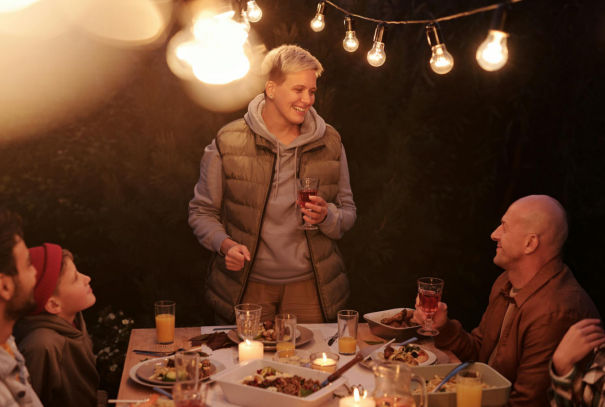
Outdoor dinners shift as the light changes. What starts in daylight slowly moves into the evening. If you don’t plan for that, the space can feel too dark once the sun sets. So, add lighting that feels soft and natural. String lights work well because they spread light evenly. Lanterns or candles add a warmer feel around the table. You don’t need anything too bright.
Avoid strong overhead lighting if possible. It can feel harsh and take away from the relaxed atmosphere. Softer lighting helps people stay comfortable and keeps the mood steady.
Think ahead, set it up early, and you won’t have to adjust things later.
Set Up a Self-Serve Drink Station
Drinks can slow things down if you handle them one by one. People ask what’s available, you step away to grab something, then repeat the same process again. It breaks your flow and pulls you out of conversations.
A self-serve setup fixes that.
Pick a small table or corner and place everything there. Water, a few cold drinks, maybe one simple signature option like lemonade or a light cocktail. Add cups, ice, and napkins so guests don’t need to ask for anything. Keep it easy to reach.
Once it’s set up, people help themselves. You don’t have to keep track of who needs what. It frees you up to stay present instead of managing small tasks all evening.
Think About Comfort for Guests
Outdoor settings can shift quickly. The temperature drops, bugs show up, or the seating starts to feel less comfortable after a while. Planning for these small things makes a big difference.
Have a few extras ready. Light blankets if it gets cooler. Cushions for chairs. Bug spray nearby if needed. If it’s warm, a fan or a shaded spot helps.
You don’t need to overprepare. Just think ahead and cover the basics so no one feels uncomfortable halfway through the evening.
When guests feel at ease, they stay longer and enjoy the moment more.
Play Background Music That Fits the Mood
Silence can feel a bit empty outdoors. Music fills that space, but it needs to stay in the background. Pick something light and familiar. Nothing too loud or distracting. The goal is to support conversation, not compete with it. Set the volume low enough that people don’t have to raise their voices. Once it’s playing, you don’t need to adjust it much. Let it run in the background and do its job.
It adds a layer to the evening without taking attention away from what matters.
Don’t Over-Schedule the Evening
Trying to control every moment usually backfires.
A strict timeline adds pressure. You end up watching the clock, adjusting things, and trying to keep everything on track.
That’s not the kind of energy you want.
Let things flow instead.
Serve food when it’s ready. Let conversations build naturally. Give people time to sit, talk, and enjoy themselves without feeling rushed.
If something takes longer than expected, it’s fine. A relaxed pace keeps the atmosphere easy.
A relaxed outdoor dinner doesn’t come from doing more. It comes from doing less, but doing it right.
When you keep things simple, prepare ahead, and let go of small details, the whole evening just feels more pleasant. You’re not rushing between tasks or fixing things in the moment. You’re actually there, enjoying it with everyone else.
That’s what people remember. Not just the setup or the menu, but how easy it felt to sit, talk, eat, and stay a little longer than expected.