Introduction to Modern WAN Architecture
Wide Area Networks (WANs) have long been the backbone of enterprise connectivity. As businesses expand and adopt cloud services, the traditional WAN model struggles to maintain speed, reliability, and security. Modern WAN architecture addresses these challenges by using new technologies and design principles that support current and future business needs.
The evolution of WANs reflects the changing nature of business operations and the increasing demand for digital transformation. Today s organizations rely on a wide range of applications and services that require fast, secure, and reliable connectivity across multiple locations. As a result, the design and management of WANs must adapt to meet these new expectations.
Key Elements of Modern WAN Design
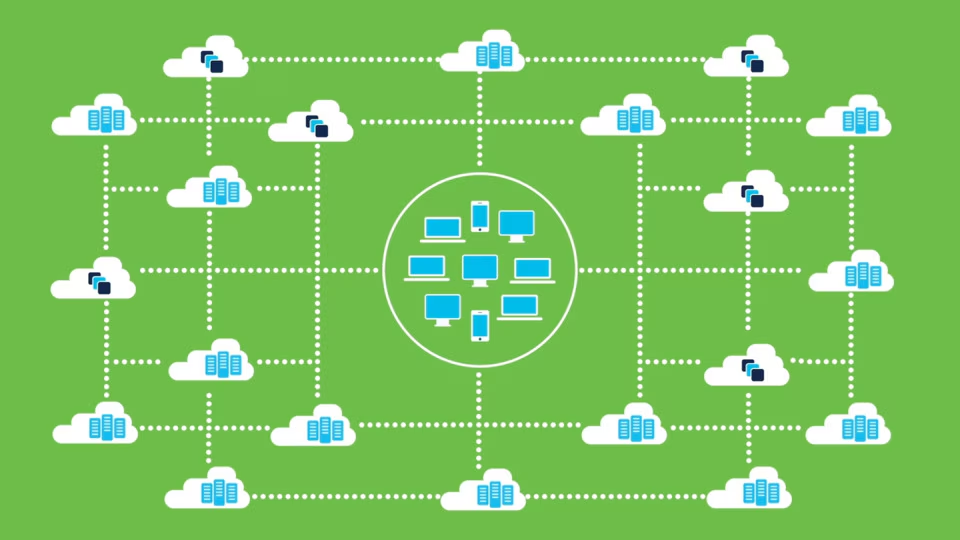
Modern WANs use multiple connection types, such as broadband, MPLS, and LTE, to connect branch offices, data centers, and cloud platforms. This approach improves flexibility and supports seamless access to applications. To learn more about how software-defined networking fits into this, see What is SD-WAN and its benefits and security. Integrating these technologies enables organizations to balance cost, performance, and security across their networks.
A key component of modern WAN design is the ability to select the best path for each traffic type. By using intelligent routing, organizations can direct critical business applications over high-quality links while sending less important traffic over cost-effective connections. This method not only improves performance for key services but also helps manage bandwidth and reduce expenses. Additionally, modern WANs often incorporate centralized management, allowing IT teams to monitor and adjust network policies from a single interface.
According to the U.S. General Services Administration, modern WANs enable greater agility by allowing quick deployment of new sites and services, which is essential for organizations with remote or mobile workforces.
The Role of Cloud and Edge Computing
Cloud adoption has changed the way WANs are designed. Modern WANs often route traffic directly to cloud services, reducing delays and improving user experience. Edge computing, where data is processed closer to the source, further reduces latency and supports real-time applications. According to the National Institute of Standards and Technology, edge computing is key for applications that need immediate data processing NIST Edge Computing Overview.
Cloud integration also means that WANs must support secure and reliable connections to multiple cloud providers. This multi-cloud approach offers flexibility and prevents vendor lock-in, enabling organizations to choose the best services for their needs. The growth of edge computing complements this by offloading processing from centralized data centers to locations closer to users, which is especially valuable for industries such as healthcare, retail, and manufacturing that require real-time analytics and rapid decision-making.
Furthermore, the use of direct cloud connectivity reduces the need for traffic to traverse the corporate data center, decreasing congestion and improving overall network efficiency. The importance of robust WAN design is highlighted by the increasing reliance on cloud-based productivity tools, which demand consistent and high-quality access for end users.
Security Considerations in Modern WANs
Security is a top priority in WAN design due to the rise in cyber threats and remote work. Modern WANs use encryption, secure tunnels, and advanced threat detection to protect data in transit. Segmentation is also used to isolate sensitive traffic, reducing the risk of breaches. The Cybersecurity & Infrastructure Security Agency provides guidelines for securing wide area networks.
Implementing zero-trust principles is another important aspect of modern WAN security. This approach assumes that no part of the network is inherently trusted, so every user and device must be verified before gaining access to resources. Strong authentication, continuous monitoring, and security policies tailored to user roles help prevent unauthorized access and detect threats early. As organizations expand their use of cloud and remote access, integrating security directly into the WAN is essential for safeguarding sensitive information.
Additionally, compliance with data protection regulations such as GDPR and HIPAA requires that WANs incorporate security measures that protect personal and confidential data. Security tools such as firewalls, intrusion prevention systems, and malware detection work together to provide layered defense.
Performance Optimization Techniques
To optimize performance, modern WANs use path selection, load balancing, and application-aware routing. These techniques ensure that critical applications receive the bandwidth and priority they need. Monitoring tools track network health and identify issues before they impact users. The Federal Communications Commission notes that consistent monitoring and traffic management are essential for reliable network performance.
Another important technique is WAN optimization, which includes data compression, deduplication, and caching. These methods help reduce the amount of data that needs to be sent over the network, saving bandwidth and speeding up application response times. Application visibility tools allow IT teams to understand which applications consume the most resources, enabling more informed decisions about policy and capacity planning.
Quality of Service (QoS) policies are also crucial for performance. By categorizing traffic based on its importance, WANs can prioritize voice, video, and business-critical data over less time-sensitive traffic. This results in improved user experience and more predictable application behavior, especially in environments with limited bandwidth.
Benefits of Modern WAN Architecture
Adopting a modern WAN architecture brings several benefits. Businesses can achieve higher application performance, lower operational costs, and stronger security. The flexibility to connect to multiple clouds and remote sites supports growth and digital transformation. By using modern WAN principles, organizations are better prepared for future technology changes.
Another benefit is improved scalability. As organizations grow or face changes in demand, modern WANs allow for quick adjustments to network capacity and configuration without major hardware investments. This scalability is valuable for seasonal businesses or those expanding into new markets. Modern WANs also support remote and hybrid work models, ensuring that employees can securely and efficiently access resources from anywhere.
Finally, modern WAN architecture simplifies network management and troubleshooting. Centralized dashboards provide real-time insight into network performance and security, allowing IT teams to respond quickly to issues and maintain high levels of service.
Conclusion
Modern WAN architecture is essential for businesses aiming to improve network performance and security. By using new technologies and focusing on flexibility and protection, organizations can support their operations and adapt to changing needs. Understanding and implementing these concepts ensures networks stay reliable and secure in a rapidly evolving digital world.
FAQ
What is the main difference between traditional and modern WAN architecture?
Traditional WANs rely on fixed, private connections like MPLS, while modern WANs use multiple connection types, including broadband and cloud, for greater flexibility and performance.
How does modern WAN architecture improve security?
Modern WANs use encryption, segmentation, and threat detection to protect data and isolate sensitive traffic, reducing the risk of cyberattacks.
Why is cloud integration important for WAN design?
Cloud integration allows direct access to cloud applications, reducing delays and improving user experience for remote and branch users.
What role does edge computing play in WAN performance?
Edge computing processes data closer to users, reducing latency and supporting applications that require real-time responses.
Can modern WAN architecture reduce operational costs?
Yes, by using cost-effective connection types and optimizing traffic, modern WANs help lower network expenses while maintaining high performance.