The classroom has expanded beyond physical walls into the digital world, reshaping education. Online students now enjoy the privilege of accessing global educational resources. Yet, this digital shift also raises the critical issue of online privacy. Ensuring secure online learning is essential for both students and educators.
Exploring secure online learning, we focus on developing privacy strategies to protect student data. With numerous platforms available at our fingertips, online students need to know how to navigate these spaces safely. This article aims to guide you with practical privacy tips and highlight tools like Virtual Private Networks (VPNs) for a secure learning environment. Together, let’s strengthen online privacy, allowing all students to learn freely and securely.
Key Takeaways
- The digital classroom presents opportunities and privacy concerns for online students.
- Accessing global education resources requires a conscious effort towards securing one’s personal information.
- Implementing privacy measures is crucial in the current landscape of online education.
- Students can benefit from privacy tools like VPNs to ensure secure online learning.
- This article aims to provide practical privacy tips for navigating online learning platforms safely.
Understanding Online Privacy for Students
In today’s digital world, protecting personal data and following privacy best practices are crucial for students in online learning. This is due to the various cyber threats faced by those in virtual classrooms. It shows the need for strong data protection measures.
The Importance of Protecting Your Data
Data protection in online learning is vital. Educational platforms hold sensitive information about users, including personal details and academic records. Without strong data protection, this information is at risk of breaches or unauthorized access, endangering students.
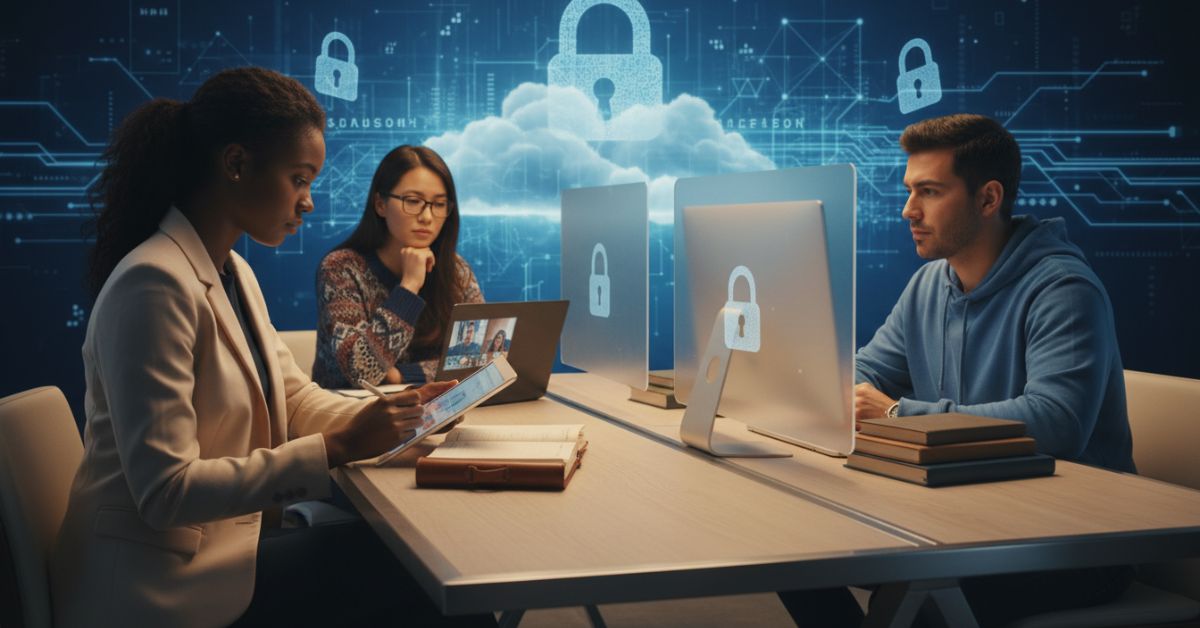
Common Cyber Threats in Online Learning
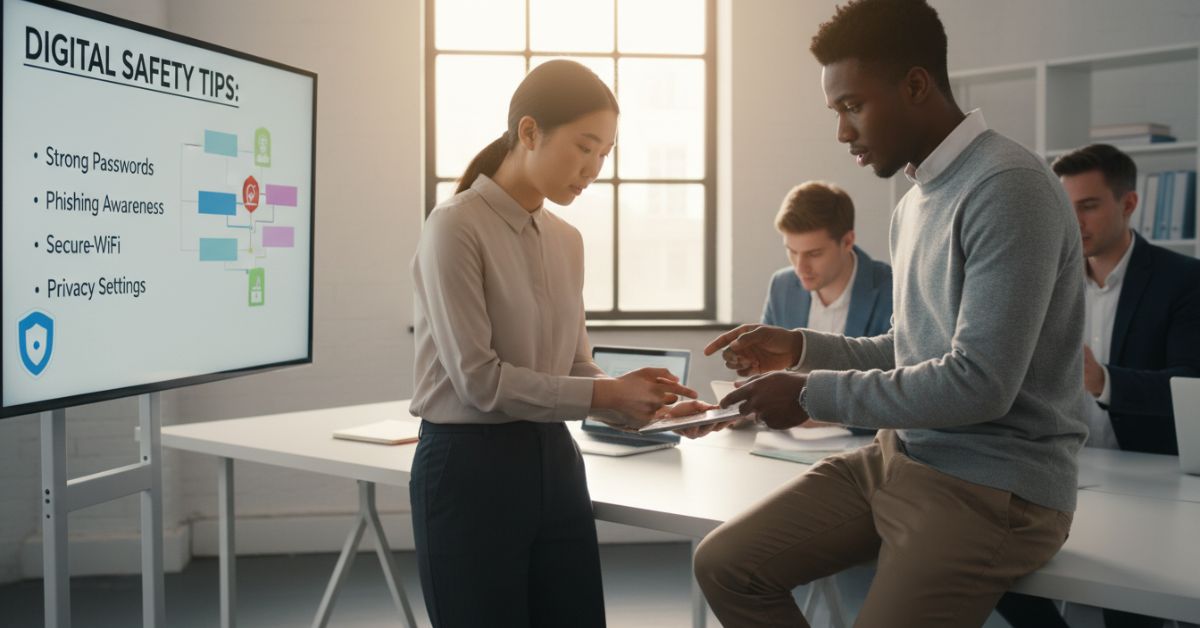
Cybercriminals often target online learning platforms with tactics like phishing, malware, or ransomware. Phishing scams trick students into sharing personal info, while malware can steal data or corrupt files. Knowing these threats is key to defending against them.
Basic Online Privacy Best Practices
Students should use strong, unique passwords and secure, encrypted Wi-Fi. They should also ensure devices are updated with antivirus software. Being cautious about app and website permissions is also important, sharing personal data only when necessary.
By following these privacy best practices, students can greatly improve their online learning security. This protects them from cyber threats and ensures a safer learning environment.
Using a VPN to Change Location for Secure Access
The digital learning landscape has dramatically changed, pushing students to explore a wider range of academic resources. Using a VPN to change location not only broadens these opportunities but also enhances data security. This ensures students can study freely, without the constraints of geographical or digital borders.
A VPN masks the user’s real IP address, allowing students to bypass content restrictions based on location. This opens up a vast array of educational resources previously inaccessible. It’s not just about accessing more information; it’s about creating a rich, diverse, and globally informed educational experience. For students on a tight budget, a free VPN can be a game-changer, offering essential services without financial burden.
How a VPN Enhances Educational Resource Accessibility
A VPN’s ability to alter your virtual location makes it a crucial tool for academic research and learning. It enables access to papers restricted to specific regions or educational videos not available in your country. This makes it an indispensable tool for bridging the gap in educational resources.
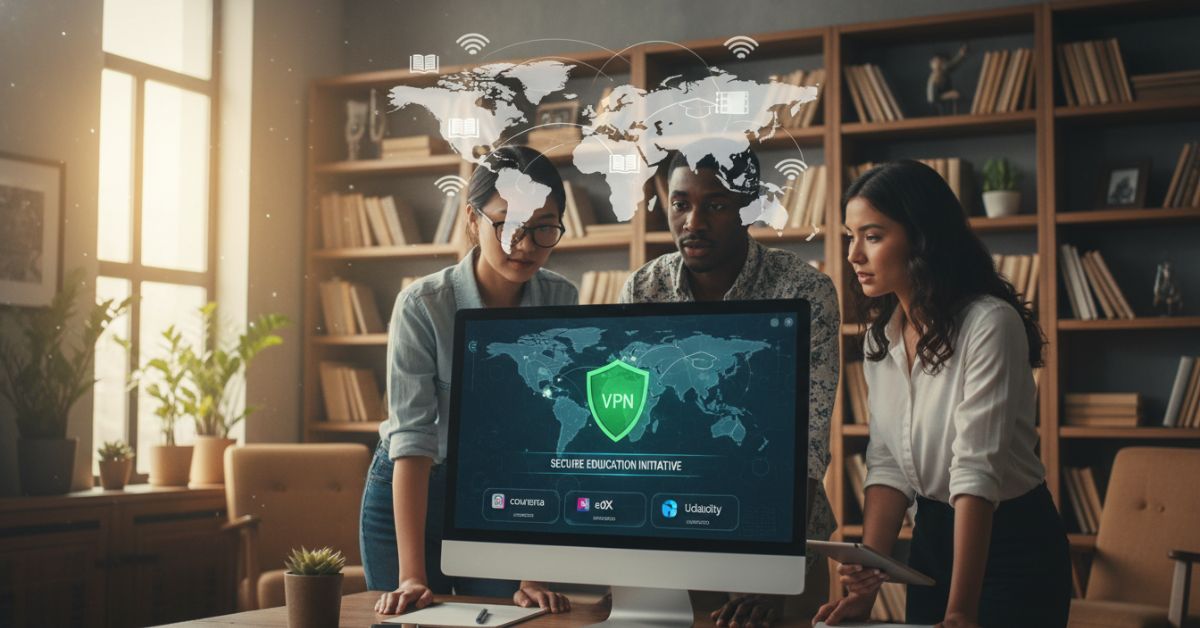
Planet VPN: A Reliable Option for Students
Planet VPN is a standout choice for students, offering robust security features and fast connection speeds. It ensures seamless access to a vast array of academic materials while protecting the user’s privacy and online activities.
Free VPN No Sign Up: Pros and Cons for Students
Free VPNs offer immediate access and zero cost, which are significant advantages. However, students must consider the potential downsides. These include limited data allowances, decreased speed, and lower security levels.
| Feature | Free VPN No Sign Up | Planet VPN |
| Cost | Free | Subscription-based |
| Data Allowance | Limited | Unlimited |
| Security | Basic | Advanced Encryption |
| Speed | Variable | High-speed Connections |
Students aiming for the best academic performance must balance immediate needs with long-term security when choosing a VPN. In today’s digital world, a reliable VPN is not just a tool; it’s a cornerstone of a secure and expansive academic journey.
Conclusion
Secure online learning relies on students protecting their privacy while exploring global education. This article highlighted the importance of safeguarding personal data against cyber threats. Basic privacy best practices are essential for a secure educational journey online.
Moreover, using a VPN to change location is crucial for accessing educational resources worldwide. Solutions like Planet VPN help bypass geographical restrictions and ensure data encryption. A reliable VPN provides invaluable security for those seeking knowledge online.
For students diving into e-learning, staying vigilant and proactive in privacy matters is key. Using a VPN is a wise step towards accessing global education securely. Stay informed about digital tools and protect your online presence. In today’s Internet-based education, security is not just beneficial – it’s necessary.