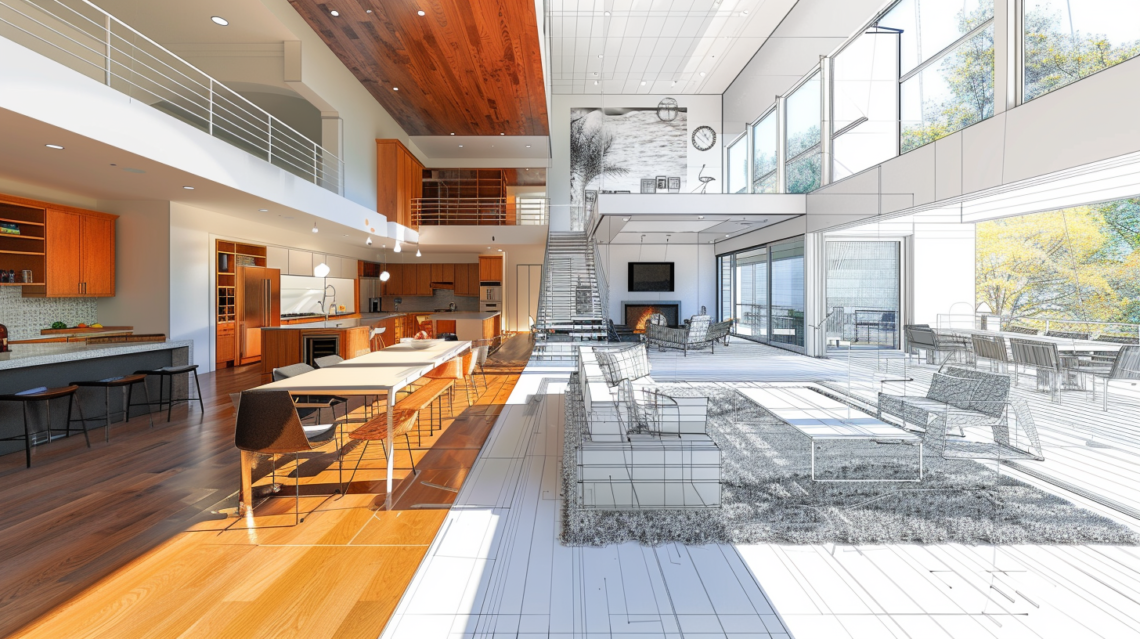
Open floor plans feel bright, modern, and social, but they can also make indoor comfort harder to control. When the kitchen, dining area, and living room share one wide space, temperature and airflow behave differently than they do in homes with smaller, separated rooms. Warm air from cooking can drift farther than expected, sunlight can heat large zones unevenly, and a single thermostat reading might not reflect what people feel on the couch, at the table, or near a tall window wall. Some homeowners experience hot-and-cold pockets, stubborn humidity, noisy airflow, and rooms that never seem to match the thermostat setting. HVAC contractors address these issues by treating the home as a system rather than a set of isolated rooms. They focus on how air moves, where heat enters and exits, and how equipment responds to changing loads throughout the day, so comfort remains consistent rather than accidental.
Comfort Fixes for Open-Concept Living
Why Open Layouts Create Uneven Temperatures
The same design features that make open homes attractive can amplify comfort problems. A large connected space typically has fewer doors, fewer walls, and longer sightlines, which means air has fewer natural stopping points. If supply vents push air strongly in one direction, it can shoot across the room, leaving still, warm areas behind. Ceiling height also plays a role: many open layouts include vaulted ceilings or tall two-story spaces, and warm air rises quickly, collecting overhead while people remain cooler below in winter and warmer below in summer, depending on the system’s balance. Add expansive glass, sliding doors, or open staircases, and the temperature can drift further because outdoor heat gain or loss spreads across the entire zone. Even furniture placement affects results, since large sectionals, kitchen islands, and shelving can block airflow paths. Contractors begin by looking at patterns: which hours feel uncomfortable, where drafts form, and whether the problem is temperature, humidity, or both. That diagnosis informs whether adjustments can be made to airflow, controls, or the equipment itself.
2. Evaluating Airflow, Returns, and Pressure Balance
A common root cause in open floor plans is airflow imbalance rather than a lack of cooling or heating capacity. Contractors often start with measurements—static pressure, temperature split across the coil, and airflow at key supply registers—because open spaces can reveal duct issues that were hidden in smaller-room layouts. Returns are especially important. If a large open area has limited return capacity, the system can struggle to pull air back effectively, leading to pressure differences that cause some areas to feel stagnant while others feel windy. In homes with closed bedrooms off the open space, poor return strategy can also create pressure buildup when doors are shut, which affects the whole system’s flow. A contractor may recommend adding a return, resizing existing returns, or correcting duct restrictions to ensure the system circulates air smoothly. They also look at where the thermostat sits; if it’s near a return or in a hallway that doesn’t reflect daily living zones, it can misread conditions and cycle the system at the wrong times. For service options and examples of system evaluations, visit Legend Air Conditioning & Heating for additional context on how contractors approach airflow-related comfort issues.
3. Zoning and Control Strategies for Large Shared Spaces
When one thermostat controls a large open area and nearby rooms, the system often has to “average” comfort, leaving someone unhappy. Zoning is a practical way for contractors reduce that compromise. Instead of forcing the whole main level to behave like a single room, zoning breaks the home into areas that can be conditioned based on actual use and heat load. In an open-plan layout, a contractor might separate the kitchen and living area from the hallway and bedrooms, or zone by floor level if stairs are open to the main space. Zoning can involve motorized dampers, separate thermostats, and a control panel that manages how much air goes where. The goal isn’t to create strict boundaries—air still mixes in open spaces—but to give the system enough control to respond to real differences, such as afternoon sun on the living room windows or extra heat from cooking. Contractors also consider “setback behavior,” because aggressive temperature setbacks can cause long recovery cycles in open areas, leading to uncomfortable swings. With better control logic, temperature changes become smaller and more stable across the day.
4. Equipment Selection That Matches Variable Loads
Open floor plans tend to have changing comfort demands. A quiet morning might require minimal conditioning, but the same space can heat up quickly once appliances run, guests arrive, and sun pours through large windows. Contractors address this by choosing equipment that handles variable loads smoothly instead of operating like an on-off switch. Two-stage or variable-speed systems help because they can run longer at lower output, which often improves temperature consistency and humidity control. Longer, gentler cycles also reduce the “blast of air” feeling that some homeowners dislike in open areas. The indoor blower’s capability matters too; if duct design requires higher airflow to distribute conditioned air across a wide room, the system must deliver it without creating excessive noise. Contractors compare the home’s heating and cooling loads with how the equipment actually performs in local conditions, then match capacity and airflow to the layout’s needs. They also pay attention to filtration and airflow resistance, because restrictive filters can reduce circulation and make an open plan feel uneven. When equipment and airflow are matched correctly, the home feels steadier even as daily conditions change.
5. Duct Design, Vent Placement, and Air Mixing
In open layouts, vent placement has a bigger impact because there are fewer interior walls to help redirect air. Contractors may recommend adjusting supply locations so air reaches the perimeter where heat gain and loss are strongest, such as near large windows or exterior doors. If supplies are concentrated in one portion of the room, the rest of the space may never mix properly, leaving hot corners in summer and cool corners in winter. Return placement also influences mixing: a well-placed return can draw air across the room, helping distribute conditioned air rather than letting it short-cycle back to the return too quickly. In some cases, contractors correct issues by sealing duct leaks, improving insulation on ducts that run through attics, or resizing duct runs that are too narrow for the airflow needed. They may also suggest air distribution enhancements, such as balancing dampers, different register styles, or adjusting throw patterns to ensure air spreads without creating drafts. In homes with high ceilings, stratification can be addressed with ceiling fans or controlled airflow patterns that keep temperatures more even at the levels where people live, sit, and sleep.
6. Humidity and Air Quality
Humidity often becomes more noticeable in open-concept homes because the air volume is larger and moisture sources like cooking and frequent door openings affect the entire space. Contractors focus on proper runtime, airflow settings, and equipment configuration so the system can remove moisture steadily instead of cycling off too quickly. They may adjust blower speed to support dehumidification, especially during mild but humid weather. Ventilation matters as well, since stale air can linger in large shared areas, making the home feel heavy even when the temperature is correct. Filtration choices should balance air cleanliness with airflow, because overly restrictive filters can reduce circulation and worsen comfort complaints.
7. Fine-Tuning Through Testing and Homeowner Habits
Solving open-floor comfort issues isn’t always a single repair; often it’s a combination of adjustments guided by real testing. Contractors may perform follow-up checks after balancing airflow or installing control improvements to confirm that temperatures are more consistent across multiple points in the space. They also ask homeowners about usage patterns because lifestyle affects load: frequent cooking, many occupants, and high electronic use can raise indoor heat, while large pets and humidifiers can affect moisture levels. Sun management is another factor; blinds, window film, or shading can reduce hot spots that no HVAC system can fully “erase” without support. Contractors also examine insulation and air sealing, especially in attic areas above open spaces where heat transfer can be intense. If the home is leaky, conditioned air escapes, and outdoor air infiltrates, this makes comfort harder to stabilize. Even thermostat programming can matter: gentle scheduling and realistic setpoints often feel more comfortable than aggressive swings. When homeowners and contractors work together—combining airflow tuning, control strategy, and practical habit changes—the open plan becomes comfortable without constant thermostat battles.
Making Open Spaces Feel Consistently Livable
Open floor plans can be comfortable, but they usually demand a smarter HVAC strategy than homes with separated rooms. Uneven temperatures often result from airflow imbalance, return limitations, thermostat placement, or a system that can’t smoothly adjust to changing loads across a large shared space. HVAC contractors address these problems by measuring real performance, improving circulation, refining duct and vent placement, and using zoning or modern controls when needed. Equipment choices that support longer, steadier operation can reduce swings and help manage humidity, while duct sealing and balancing can eliminate stubborn hot or cold pockets. Comfort also improves when building factors—insulation, air leakage, and sun exposure—are addressed alongside mechanical changes. With the right combination of diagnostics and targeted upgrades, open-concept living becomes calmer and more predictable, letting the design feel inviting without sacrificing the everyday comfort that makes a home enjoyable year-round.