A go pro camera has become one of those tools that just makes sense once you start using it. These compact cameras were originally built for extreme sports, but they’ve spread into travel vlogging, family documentation, and even professional film work. The reason is simple: they’re tough, they’re small, and they capture stabilized footage in situations where regular cameras would fail. What started as a wrist-mounted surfing camera in 2004 has turned into a multi-purpose recording device that handles everything from skydiving to cooking tutorials.
Action Sports Recording
This is where GoPros made their name. The camera’s rugged build can handle impacts, water, dust, and temperature swings that would destroy a traditional camera. Mounting systems let you attach them to helmets, chest harnesses, bike frames, or surfboards without worrying about the camera flying off mid-action.
The HyperSmooth stabilization technology is what really changed things for action recording. Earlier action cameras produced shaky, almost unwatchable footage unless you had expensive gimbals. GoPro’s digital stabilization smooths out vibrations and sudden movements in real time, so even footage from a mountain bike going downhill looks surprisingly steady. The Hero 11 and newer models can stabilize up to 4K at 60fps, which gives you smooth slow-motion playback.
Most action users shoot in wide-angle mode because it captures more of the environment and makes movement look more dramatic. The 155-degree field of view on recent models is wider than what your eyes naturally see, creating that signature GoPro look where everything feels fast and immersive.
Travel and Vlog Documentation
Travel creators love these cameras because you can toss one in a small bag and forget about it until you need it. Battery life sits around 1.5 to 2 hours of continuous 4K recording, which is enough for a day of casual shooting if you’re not recording everything. The newer models have better battery efficiency in standard video modes compared to the earlier Hero versions that drained fast.
For travel vlogging, the front-facing screen on Hero 9 and later models solved a huge problem. You can actually see yourself while recording, which matters when you’re doing pieces to camera or checking framing. Before that feature, vloggers were basically guessing whether they were in the shot.
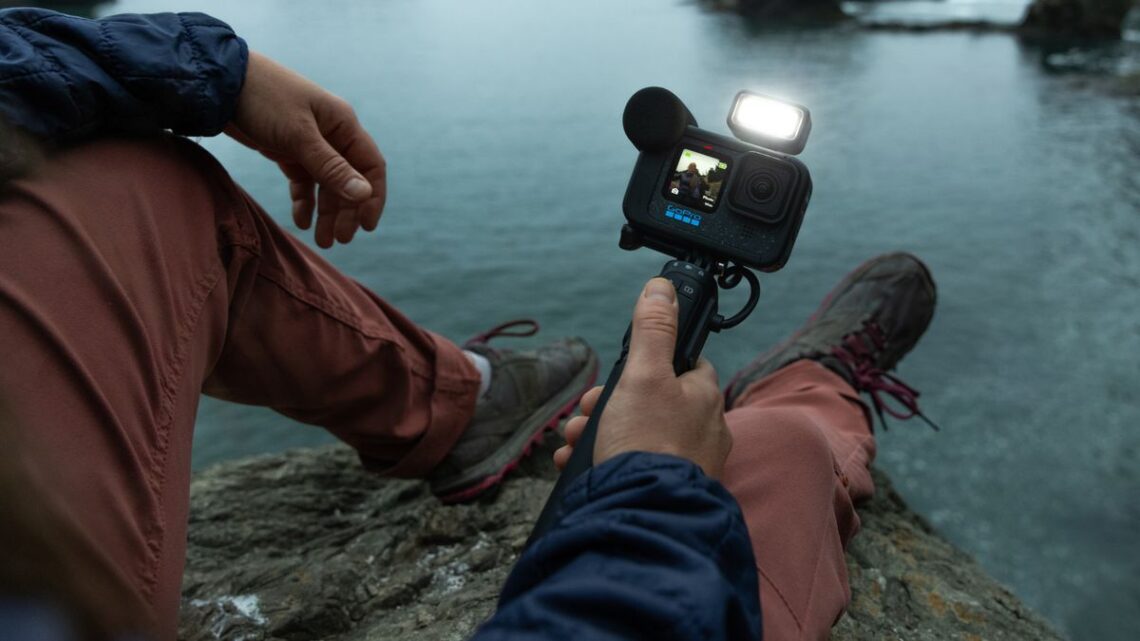
Audio quality used to be the weak point, especially in windy conditions. The Hero 12 added better wind-noise reduction and improved the microphone array, but serious vloggers still use external mics through the media mod accessory. In quiet indoor settings, the built-in audio is fine for casual content.
Everyday Recording and Creative Projects
People use GoPros for things you wouldn’t expect. Time-lapse construction projects, recipe videos shot from overhead mounts, pet-perspective cameras, dashcam replacements. The versatility comes from how easy it is to position these cameras in unusual spots.
The waterproof housing (up to 10 meters without extra cases on recent models) means you can use them in rain, at the beach, or even underwater for pool videos without stress. That durability makes them popular for filming kids, since drops and spills don’t immediately mean a broken camera.
Voice control on newer models lets you start and stop recording hands-free, which actually gets used more than you’d think. When your hands are full or dirty, just saying “GoPro, start recording” is genuinely useful. The Quik app for editing makes it relatively simple to pull clips, trim them, and share without needing desktop software, though serious editors still prefer working in Premiere or Final Cut.