Water damage is one of those things that gets exponentially worse the longer you wait to deal with it. Professional water damage services use specialized equipment and systematic processes to minimize both immediate damage and long-term structural issues that homeowners often don’t see until it’s too late. According to insurance industry data, water damage accounts for roughly 20% of all property insurance claims in Australia, with costs that can easily reach tens of thousands of dollars when not addressed quickly. The difference between calling professionals within hours versus days can literally be the difference between drying out carpets and replacing floor joists. These services aren’t just about sucking up visible water; they’re about understanding building materials, moisture migration patterns, and how to prevent secondary damage like mold growth and structural rot.
Rapid Water Extraction and Classification
First thing professionals do is classify the water type because it determines the entire approach. Category 1 is clean water from supply lines or rain, Category 2 is gray water from appliances or toilets (urine only), and Category 3 is black water containing sewage or serious contaminants. Each category requires different safety protocols and disposal methods. Extraction equipment matters too. Industrial truck-mounted extractors can remove hundreds of liters per hour, way more than household wet-dry vacuums. For serious flooding, professionals might use submersible pumps rated for continuous operation. Speed is critical here because materials like drywall and insulation start deteriorating within 24 to 48 hours of water exposure. Research on building materials shows that gypsum-based drywall loses structural integrity at around 1% moisture content, and it reaches that point fast when saturated.
Moisture Detection and Mapping
Here’s where professionals separate themselves from DIY attempts. They don’t just look at visible water; they use moisture meters, infrared cameras, and hygrometers to find hidden moisture in walls, under flooring, and in ceiling cavities. Infrared thermography can detect temperature differences that indicate moisture presence, even when surfaces look dry. Professionals create moisture maps documenting affected areas and moisture levels, which becomes crucial for insurance claims and tracking drying progress. Studies show that hidden moisture is the primary cause of long-term structural damage and mold growth. I’ve seen cases where homeowners thought they’d dried everything, but moisture trapped in wall cavities caused studs to rot over months, eventually requiring full wall replacement.
Controlled Drying Environment
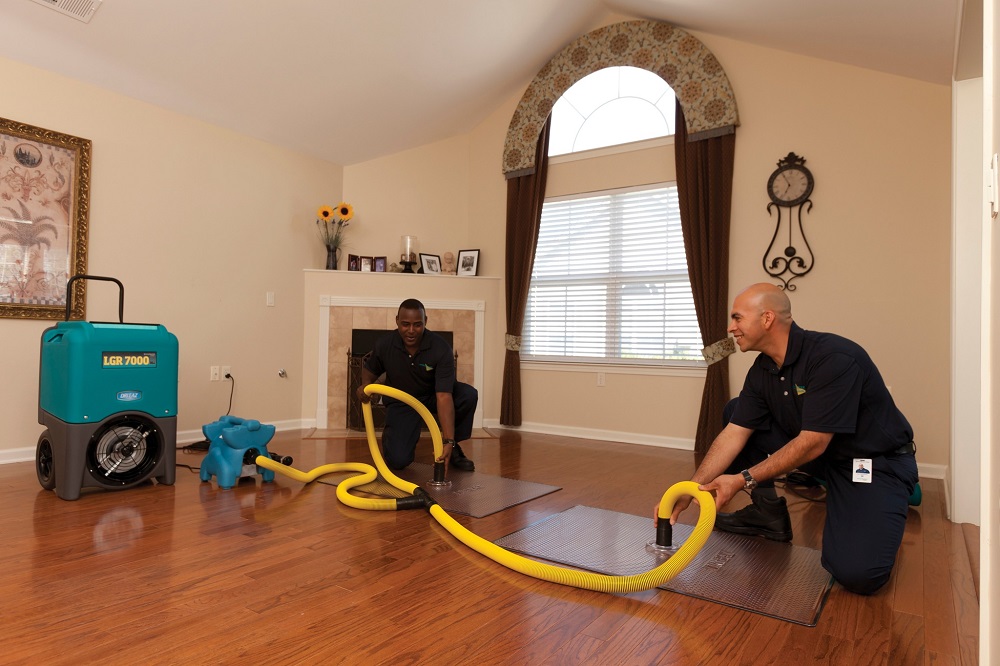
Professional drying isn’t just setting up fans and hoping for the best. It requires understanding psychrometrics, which is basically the science of air and moisture relationships. Technicians use commercial-grade dehumidifiers that can remove 50 to 100 liters of moisture per day, combined with air movers positioned strategically to create airflow patterns that maximize evaporation. They monitor temperature and humidity levels constantly, adjusting equipment as conditions change. The goal is achieving what’s called “equilibrium moisture content” where materials return to their normal moisture levels for the local climate. Research in restoration science shows that proper drying typically takes three to five days for most residential water damage, but rushing this process causes problems. Materials dried too quickly can crack or warp.
Structural Assessment and Intervention
While drying happens, professionals assess structural damage. Wood framing that’s been wet for extended periods might need treatment or replacement. Floor systems often require inspection for warping, delamination, or rot. Professionals know building codes and can identify when structural elements have been compromised beyond safe limits. They might need to remove baseboards, drill weep holes in walls, or pull up flooring to facilitate drying and prevent trapped moisture. Insurance data shows that early structural intervention reduces total claim costs by 40% to 60% compared to situations where hidden damage progresses unnoticed. The best services document everything with photos and detailed notes, creating a record that helps with insurance processing and future property transactions.