Inventory automation is essential in amplifying supply chain sustainability by ensuring better operation, reduction of waste, better energy usage, and dealing with obsolescence. Moreover, it promotes socially responsible business conduct. On the other hand, Supply chain risk is viewed as a major factor hindering the application of sustainable supply chain practices. Thus, this study aims to contribute to literature synthesis by addressing sophisticated automation methods to address risks of supply chains and enhance supply chain sustainability.
What is Inventory Control Management?
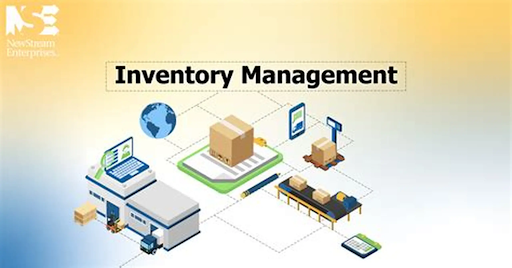
An inventory control management system is an approach or framework that firms use to manage their inventory. The inventory control framework helps businesses optimize their stock levels without running out or having an excess of stock. It entails monitoring the quantity, position, and status of the recorded items in a real-time manner. It enables efficient fulfilment of orders and minimizes operating costs, such as storage and handling costs. The idea of managing inventory has transformed over the years. With the advancement of technology, automation has taken over, and this is more accurate and reliable. Nowadays, inventory control management systems form a crucial part of the operations of an online business.
What are the Negative Effects of Implementing Automation Technologies to Enhance Manufacturing Production?
- Displacement of Jobs/Disruption of Workforce- One negative consequence of using automation to improve manufacturing production is job displacement. This technology can result in reduced employment due to a number of eliminated low-skilled jobs. This can be due to discharging activities such as assembling. Even though it increases high-skilled employment (e.g., maintaining robots), it can result in a mass displacement of people due to a lack of training for these individuals.
- High Startup Investment and Risk of Financial Loss- Investing in automation entails a high initial investment of funds in terms of equipment, software, and infrastructure. It may be a financial burden, especially for small and medium-scale manufacturers. Additionally, besides these costs, downtime and failure of automation to realize anticipated benefits entail a risk of financial losses.
- Less Flexibility in Production- The systems are often designed with precise processes in mind. It becomes quite expensive and time-consuming to modify them for different products or changes in the market.
- Dependence on Technology and Risk of Failures- As technology is introduced to automate manufacturing processes, there is now a dependence on technology. Manufacturers can face risks of technology failures, hacking attacks, and supply chain failures with respect to components and software. Typically, one failure can stop production. Cyber attacks can compromise confidential information.
The Evolution of Inventory Management
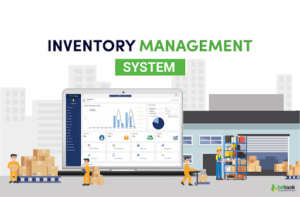
The traditional method of managing and tracking inventories has been quite manual. However, with new technologies being employed and with cloud-based services in play. This is not merely a technological shift. It also reflects a paradigm shift in handling and managing inventories.
- Real-time Benefits of Cloud Inventory Management- Cloud-based inventory management systems provide immediate visibility into every aspect of business operations. The business owners or executives can have access to correct and updated information about inventory and financial matters at all times and from anywhere.
- Accuracy of Finance- Contemporary inventory management solutions are fully integrated into finance, and this brings accuracy to financial management. All financial transactions done in an organization are automatically recorded in inventory management, and this brings accuracy to financial calculations and estimation of profitability.
- Distribution Enhancement- The cloud-based system improves the distribution process by linking the activities in the warehouse with the sales outlet directly. This facilitates the adjustment of stock levels in all channels, which avoids overselling or a lack of stock. It is easier to distribute with the system because it tracks the movements of the products effectively.
- Operational Excellence- The use of cloud-based inventory management systems changes the way the company operates. This enables employees to process orders more effectively and keep the optimal amounts of inventory without human intervention. This also removes the need for manual processes and the resulting errors. It enables employees to do more high-level work.
- Data-Driven Decision Making- Cloud-based solutions offer a strong analytical tool, allowing business entities to make concrete, data-informed decisions based on past trends, insights, and predictive analytics. This leads to efficient purchasing, cash flow management, and process improvements.
- Future-Ready Infrastructure- As the business expands, cloud-based inventory management solutions can handle the growing number of items. As a result, the IT infrastructure required by the business expands with the business.
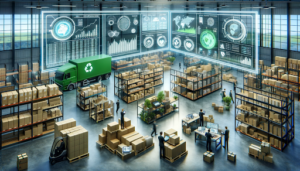
What is the Impact of Smart Inventory Control Management on Sustainable Manufacturing Automation?
Smart manufacturing technologies are transforming different industries in their own way. When it comes to the automobile industry, the integration of MES, PLC, and machine vision has transformed manufacturing processes. Automated processes are being used to ensure a higher level of quality, whereas machine vision systems are being utilized to check defects in the components before their assembly. Smart manufacturing technologies are helping car manufacturers meet consumer demands.
The food and beverages industry is also adopting smart manufacturing technologies due to various reasons. Manufacturing Execution System functionality ensures that the industry adheres to strict safety controls for the products. PLC and HMI technologies provide automation for crucial packaging and labelling operations. An inventory management system is useful for monitoring such environmental parameters as temperatures and humidity levels. This is an equally critical aspect for sustainable manufacturing because wastage is greatly reduced.
The pharmaceutical industry requires accuracy, traceability, and a focus on quality, making the adoption of smart manufacturing technology an absolute necessity. MES provides full traceability of the final product, right from the material to distribution, while maintaining strict regulatory standards. Machine vision solutions test the packaging for defects and provide accurate labelling, which has particular relevance in maintaining patient safety standards. Distributed Control Systems form a crucial element in controlling complicated pharmaceutical production operations with high accuracy.
Reliability and accuracy are required in the aerospace and defence industries, making smart manufacturing the best fit for these industries. Sustainable manufacturing helps in easy production process planning, ensuring accuracy in advanced manufacturing operations. They also help in easy adherence to strict safety and quality standards, making it easy for manufacturers to comply with the requirements of the respective industry.
The consumer electronics segment benefits from the process of intelligent manufacturing. PLC, HMI, and machine vision enable high-speed production lines, along with the precise positioning of micro-components. By combining MES with ERP systems, companies can coordinate the supply chain and manufacturing processes in accordance with the changing requirements of the consumer.
Conclusion
Manufacturing automation has both positive repercussions that including improved efficiency in the production process. It decreased the costs faced by manufacturers. But this is only a partial disclosure because manufacturing automation also has negative implications. These negative implications include the possibility that prices to consumers could go higher because, although the cost of automation to manufacturers could be high, manufacturers compensate for these costs with prices to consumers to maintain their profits rather than reducing their profit margins significantly. By using the benefits derived from automated manufacturing processes, factories with many employees might render themselves unnecessary with respect to the number of workers they require to employ. After all, manufacturers would be faced with wage erosion or downsizing workers due to their high costs. This indirectly benefits workers by enabling them to seek new jobs because workers in the manufacturing industry could switch jobs to others, made possible because of automated manufacturing processes.