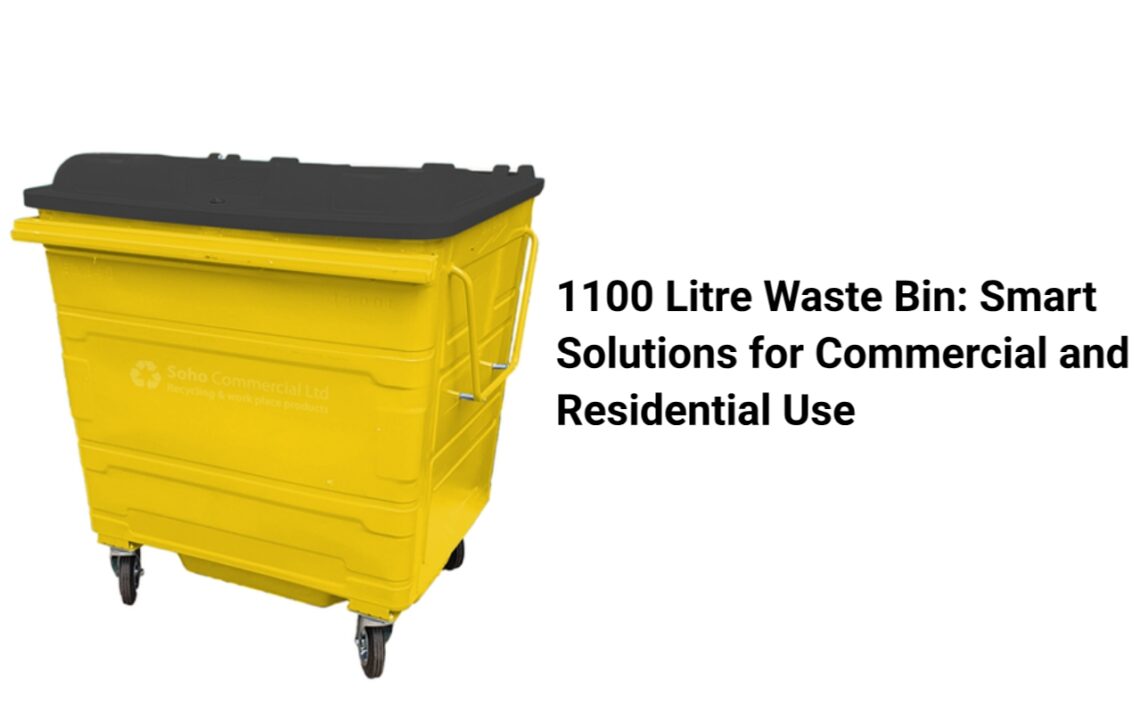
A 1100 litre waste bin serves commercial properties and larger residential complexes where standard household bins fall short of actual capacity needs. These bins integrate into automated collection systems that reduce labor costs and improve service consistency across properties generating 300-500kg of waste weekly. The sizing works for everything from apartment buildings with 10-15 units to small retail centers, hospitality venues, and light industrial facilities. Smart features now available in premium models include fill-level sensors that alert waste contractors when collection is needed rather than following fixed schedules, cutting unnecessary truck visits by 30-40% according to waste management industry data. Choosing appropriate bin configurations and placement strategies directly impacts operational efficiency, with poorly planned setups creating bottlenecks during peak waste generation periods.
Commercial Applications That Make Economic Sense
Restaurants and cafes generate concentrated waste in relatively small footprints. A busy café might produce 200 liters of waste daily, which quickly overwhelms standard bins. The 1100 litre size provides buffer capacity for busy weekends and holiday periods when waste spikes unpredictably.
Retail shops have different patterns. Most waste is packaging material from stock deliveries, which comes in bursts rather than steadily. One delivery day might fill half the bin, then nothing for two days. This irregular pattern makes larger bins practical because you’re not scheduling constant collections for bins that are usually half empty.
Office buildings produce surprising amounts of waste considering it’s mostly paper and packaging. A 50-person office typically needs at least one 1100 litre bin for general waste plus another for recycling. The math breaks down to roughly 20-25 liters per person per week for mixed waste streams.
Residential Complex Implementation
Apartment buildings in Australia increasingly use shared 1100 litre bins instead of individual small bins for each unit. This centralizes waste management and reduces street clutter. A building with 12 units might use two or three bins total, depending on collection frequency.
The challenge is resident compliance. When everyone shares bins, some people abuse the system by dumping inappropriate items or not breaking down boxes. This creates overflow situations where bins fill faster than scheduled collections. Building management often needs to monitor usage and adjust collection frequency based on actual fill rates rather than estimates.
Positioning matters a lot in residential settings. Bins need to be accessible but not directly adjacent to living spaces because of odor and noise. Ground-floor residents complain if bins are right outside their windows. Finding that balance between convenience and consideration takes thought.
Cost Analysis Versus Alternative Systems
Renting a 1100 litre bin from a waste contractor typically costs $50-150 per month depending on collection frequency and location. This seems expensive compared to residential bin costs, but it covers collection service, bin maintenance, and disposal fees.
Buying bins outright costs $800-1500 per unit for quality models. This makes sense if you’re setting up permanent infrastructure and have reliable waste collection contracts. The payback period is usually 12-18 months compared to rental costs.
Skip bins are sometimes positioned as alternatives for commercial waste, but they’re less efficient for regular ongoing waste. Skips work better for one-off projects or variable waste volumes. Regular operations benefit from the efficiency of standardized wheelie bin collection systems.
Hygiene and Odor Management Strategies
Food waste creates the worst odor problems, no way around it. Organic materials decompose rapidly in warm weather, and Australian summers make this worse. Bins holding food waste need collection at least twice weekly, maybe more in peak summer.
Bin liners help contain mess and reduce cleaning requirements, but they add ongoing costs. Heavy-duty liners for 1100 litre bins cost $3-5 each, which adds up quickly. Some facilities skip liners and just hose out bins regularly, which works if you have appropriate washing facilities.
Pest control is tied to hygiene. Rats, cockroaches, and flies are attracted to food waste specifically. Keeping lids closed properly and bins clean reduces pest problems significantly. Some areas have regulations requiring animal-proof bins in commercial settings, which means lockable lids and reinforced construction.
Smart Bin Technology Integration
Newer bin models can include sensors that measure fill levels using ultrasonic or weight-based systems. These sensors transmit data to waste contractors who optimize collection routes based on actual needs rather than fixed schedules.
The technology saves money by reducing unnecessary collections. If a bin is only 40% full on scheduled collection day, the truck can skip it and come back later. Over time this cuts fuel costs and vehicle wear while reducing carbon emissions from collection operations.
Implementation costs vary widely. Sensor systems add $100-300 per bin initially, plus ongoing data transmission fees. The payback depends on collection frequency and distance. High-volume sites with frequent collections see faster returns on investment compared to low-volume locations.